Top of the range tourer in excellent condition: Thorn Sherpa Mk3 tourer with Di2-electronic-gears and S&S couplings; unisex frame size 475M
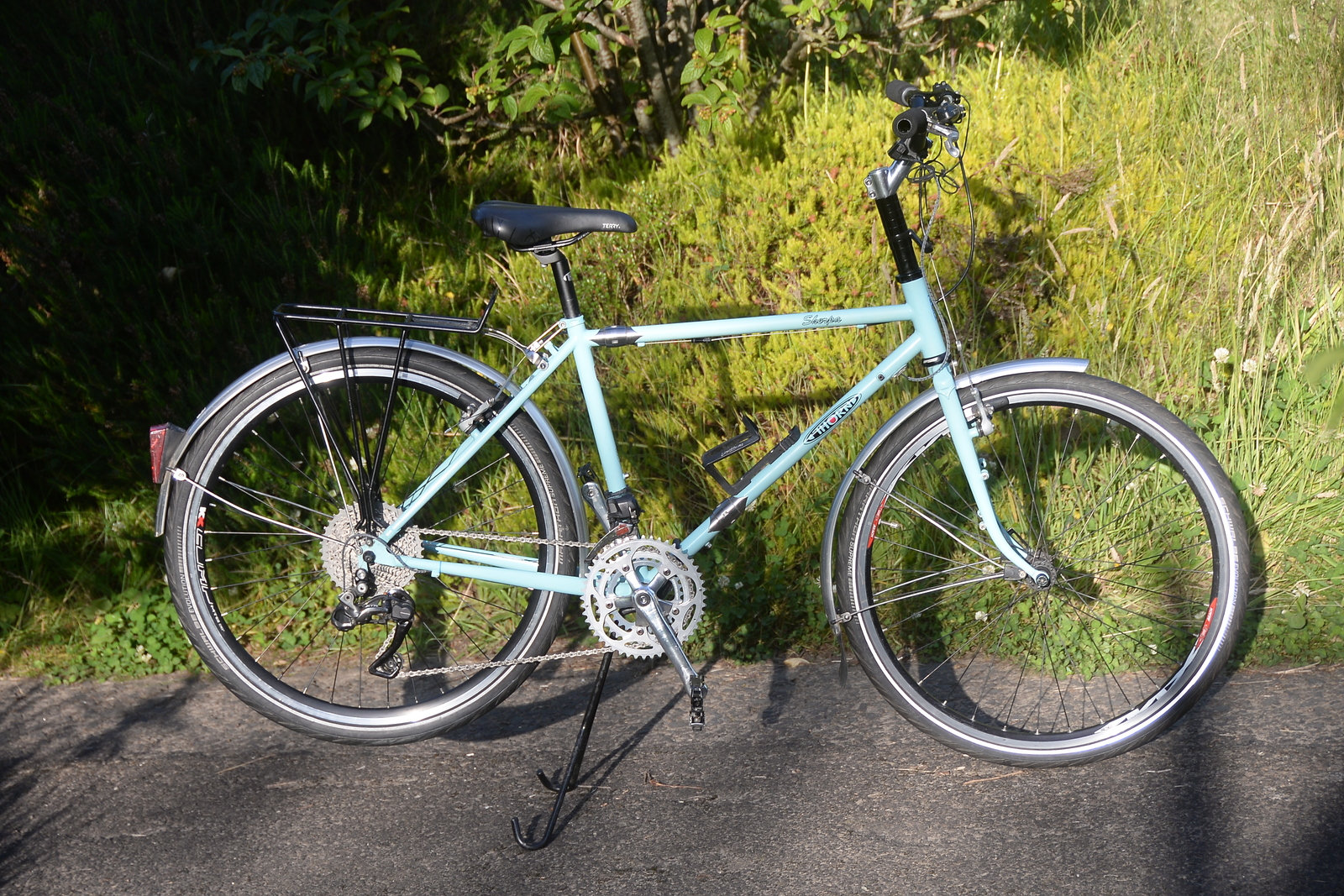
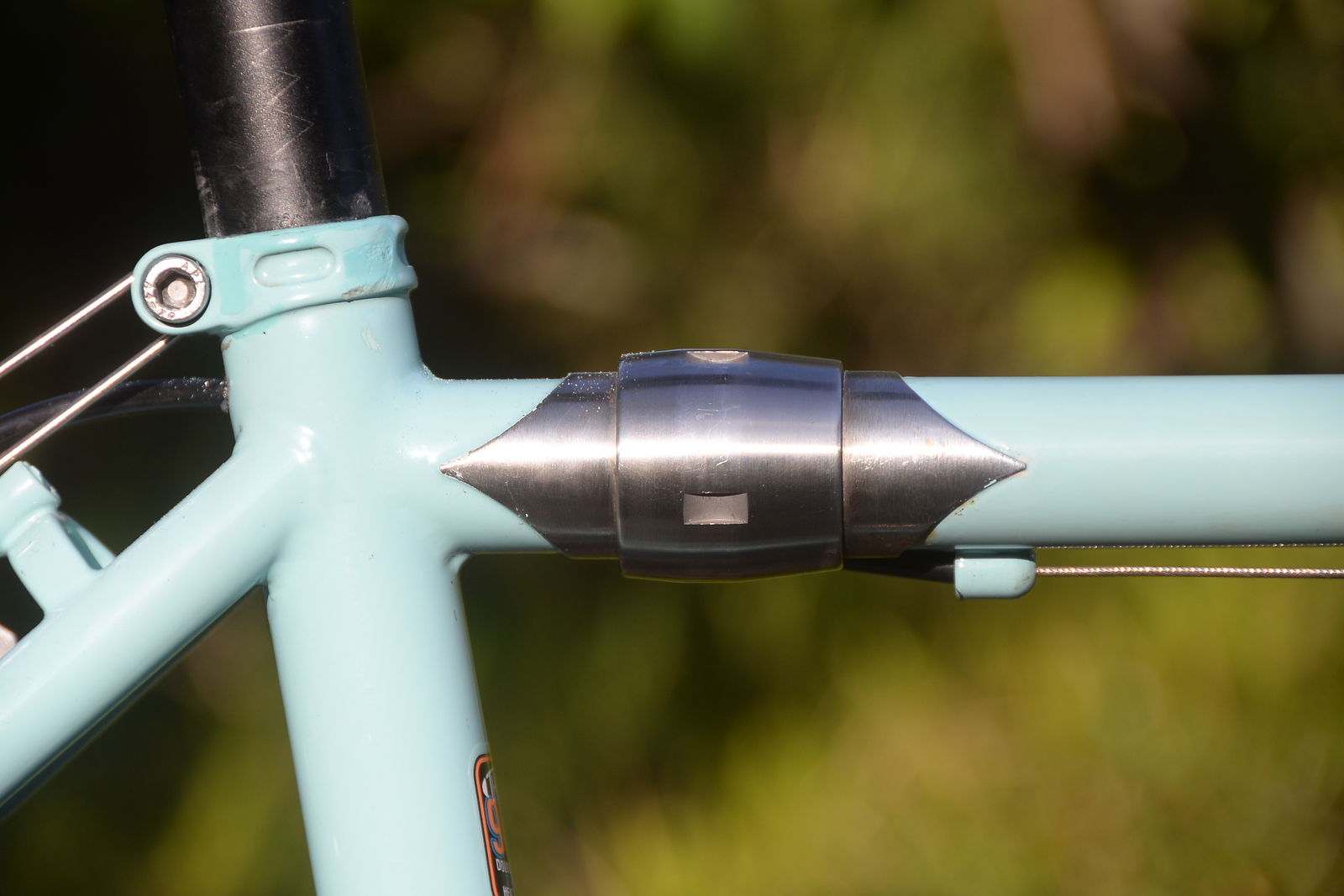
Bought in August 2017 direct from Thorn as a bare frame, built up with the detailed spec below, including Shimano Di2 electronic gears. Converted to S&S couplings and powder-coated by Ben Cooper of Kinetics in Glasgow. The S&S couplings mean the frame can be separated and boxed small enough to avoid extra airline charges.
The bike is in excellent condition and used only for one tour of 1,220 kilometres (758 miles) in eastern and northern Thailand in 2018, and another of 809 km (502 ml) in southern France in 2019. In addition to these tours, it had less than 100 miles of bedding-in rides in the UK, in dry weather only.
Electronic gears were chosen to take pressure off my arthritic thumbs and worked superbly but as my arthritis has progressed I’ve been unable to ride it more recently.
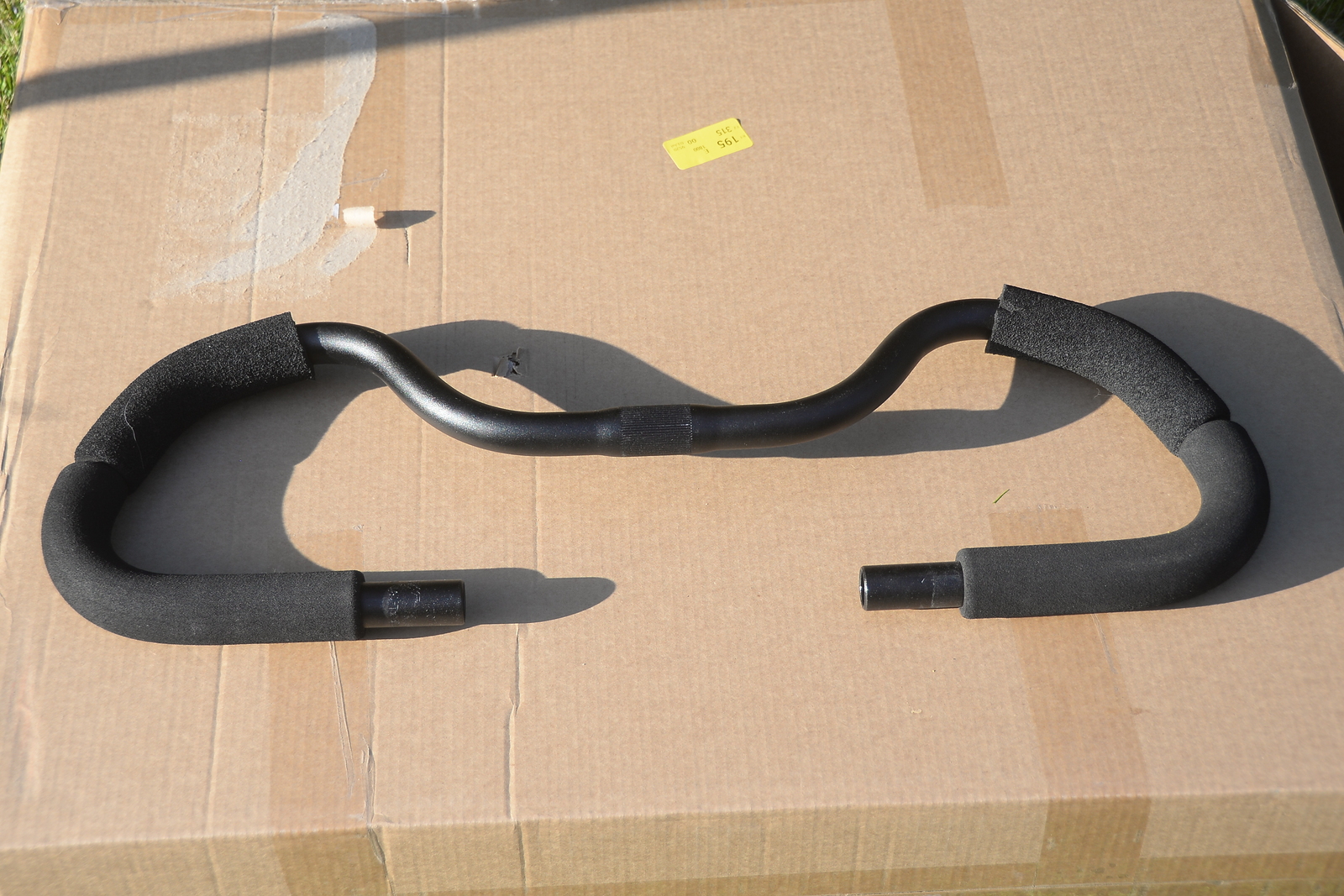
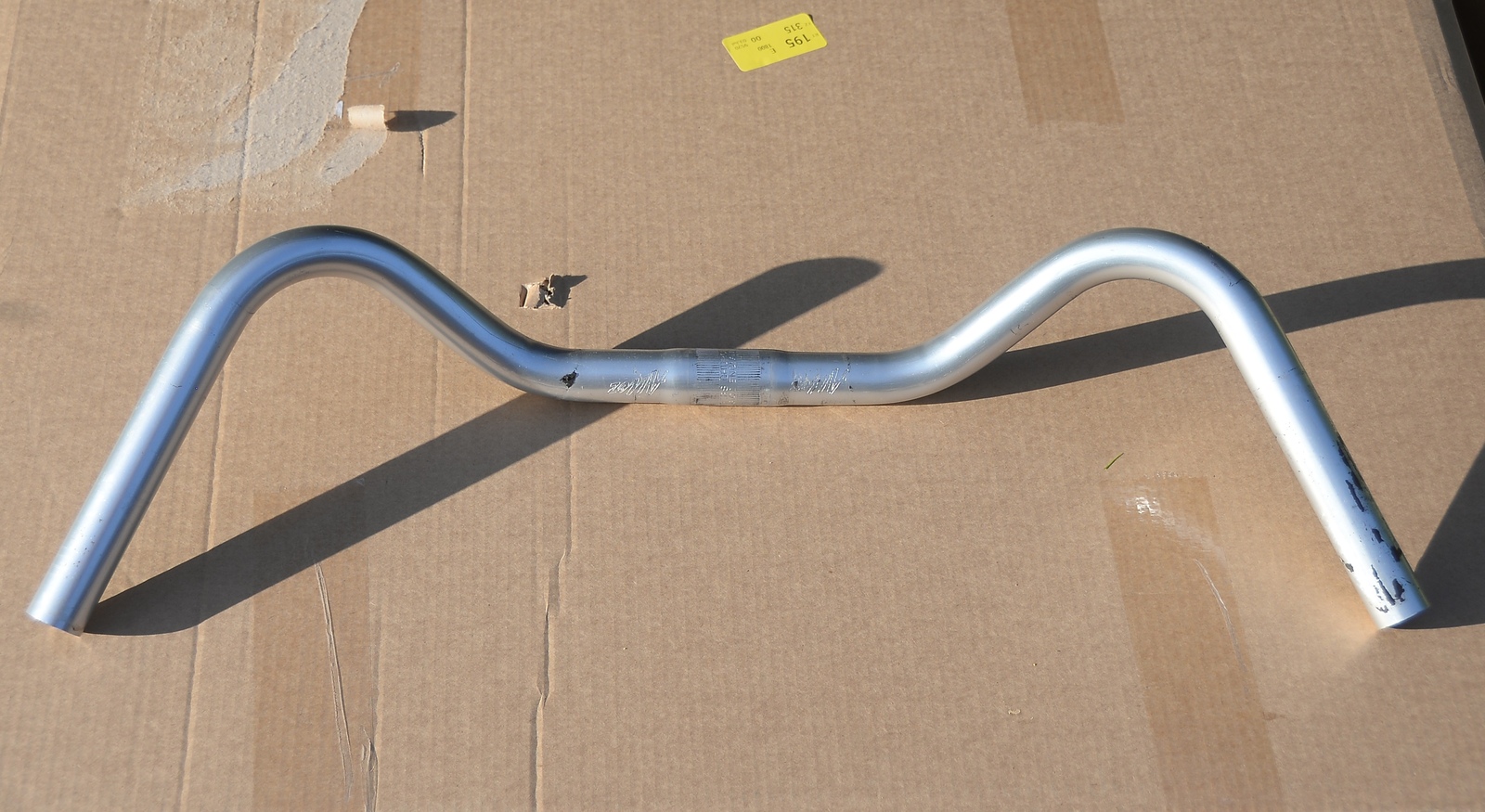
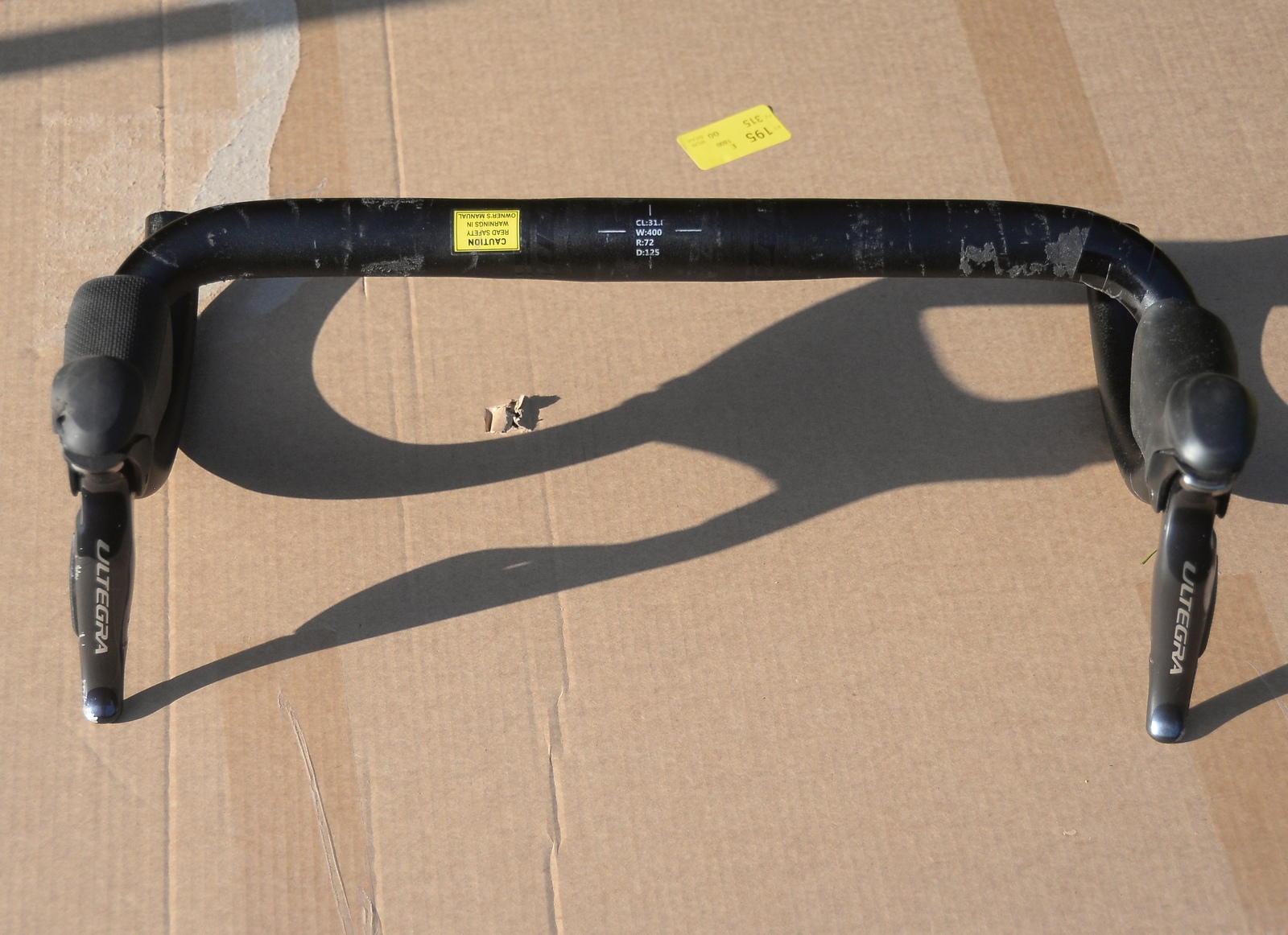
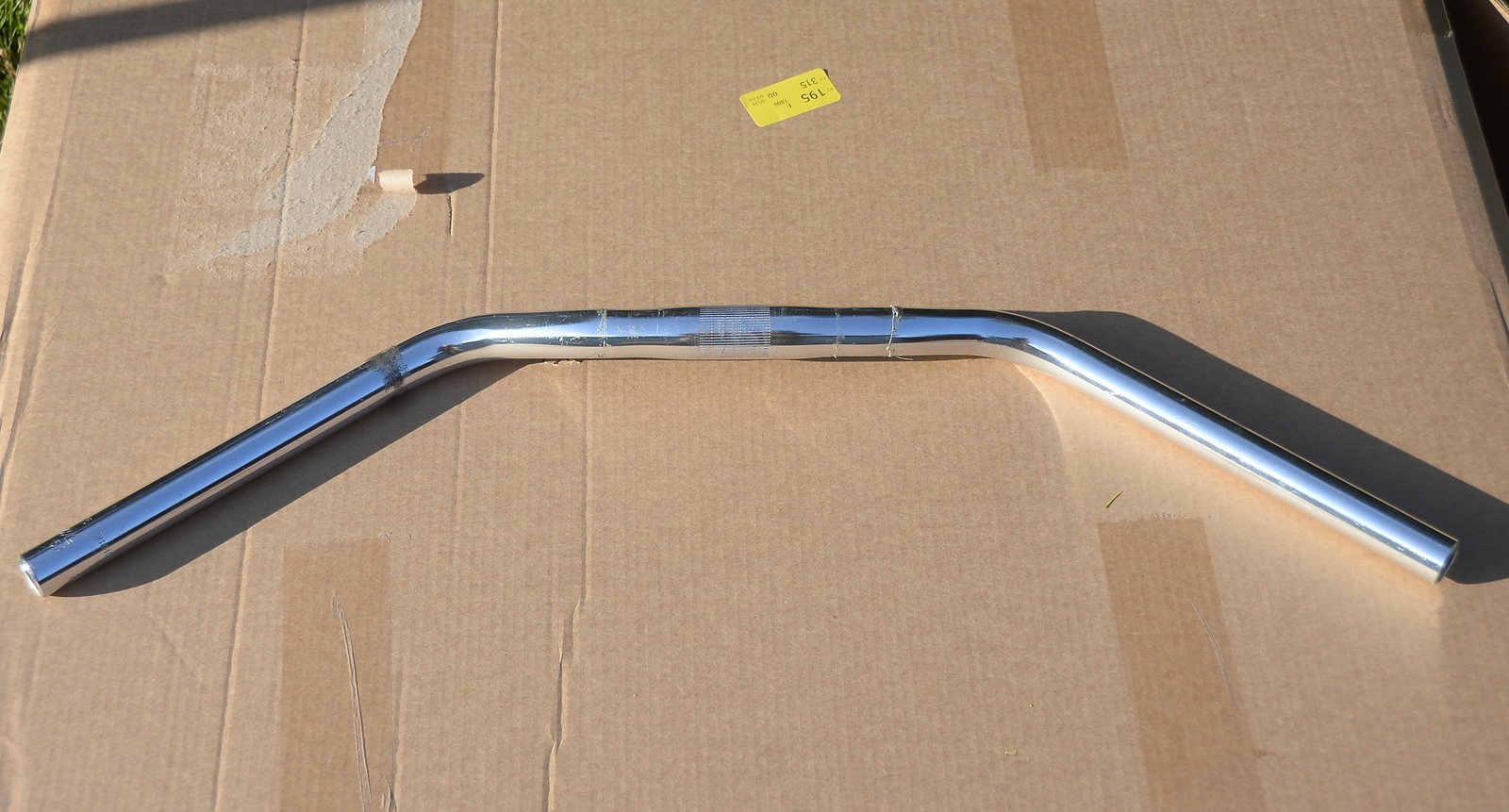
Can be fitted with straight, curved or drop handlebars to suit the buyer, details below.
PRICE: £1,950 ovno plus delivery (or collection - preferred) Numerous pictures below! Contact: email This email address is being protected from spambots. You need JavaScript enabled to view it..
The frame size is 475M for 52cm forks, reckoned by Thorn to be suitable for men or women from 1.49 to 1.57 m tall in bare feet (4'11" to 5'2"). BUT Thorn also recommended it for my 5ft 4in height, as I have slightly shorter than average legs. More relevantly perhaps, the height from ground to middle of the top-tube (ie the 'stand-over height') is approx. 71.5cm (2'4"). For a full explanation of their sizing, please message me for their brochure. If you can get to the Edinburgh or Kinross areas, then it will be possible to arrange a trial fit on an indoor trainer and/or a trial ride.
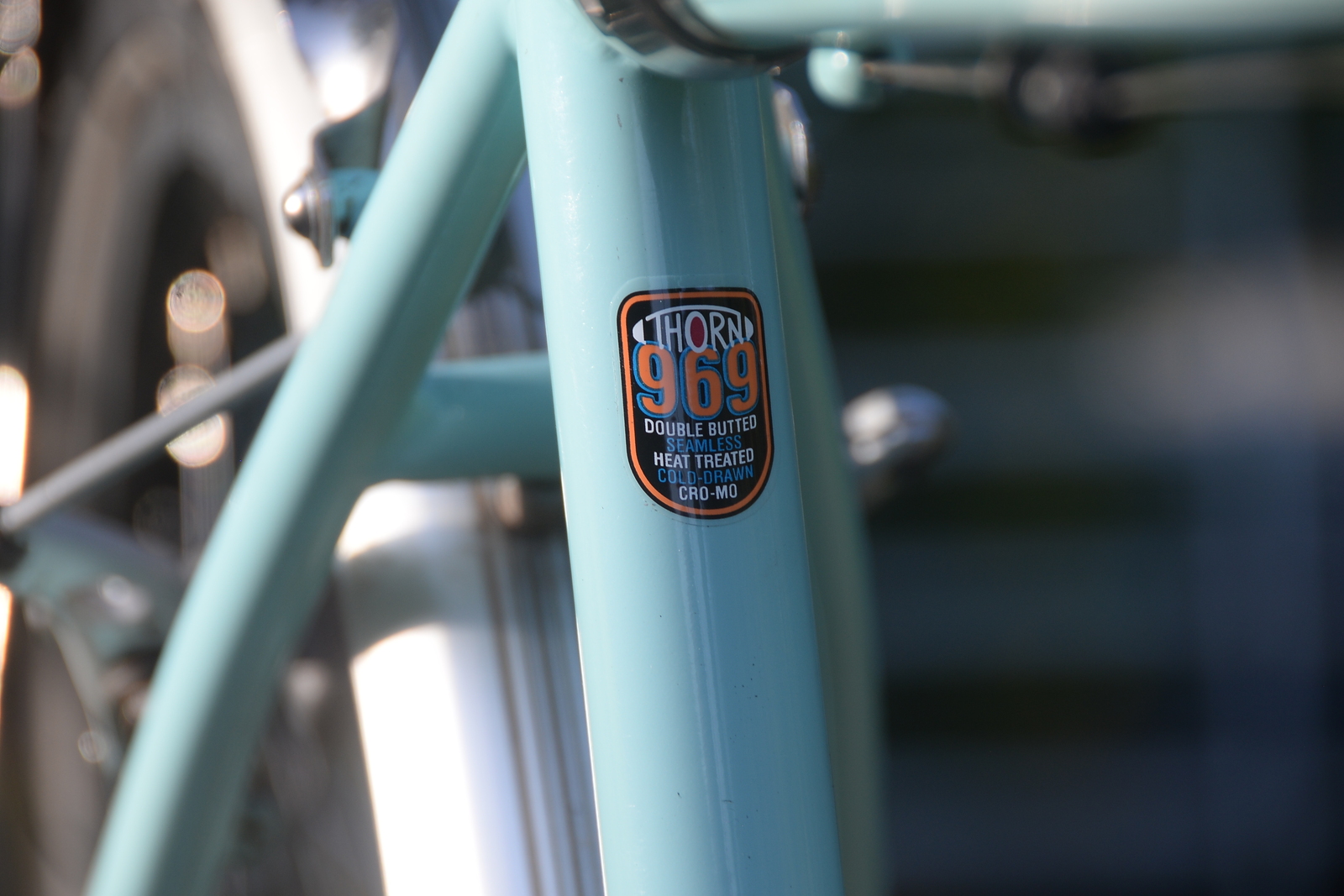
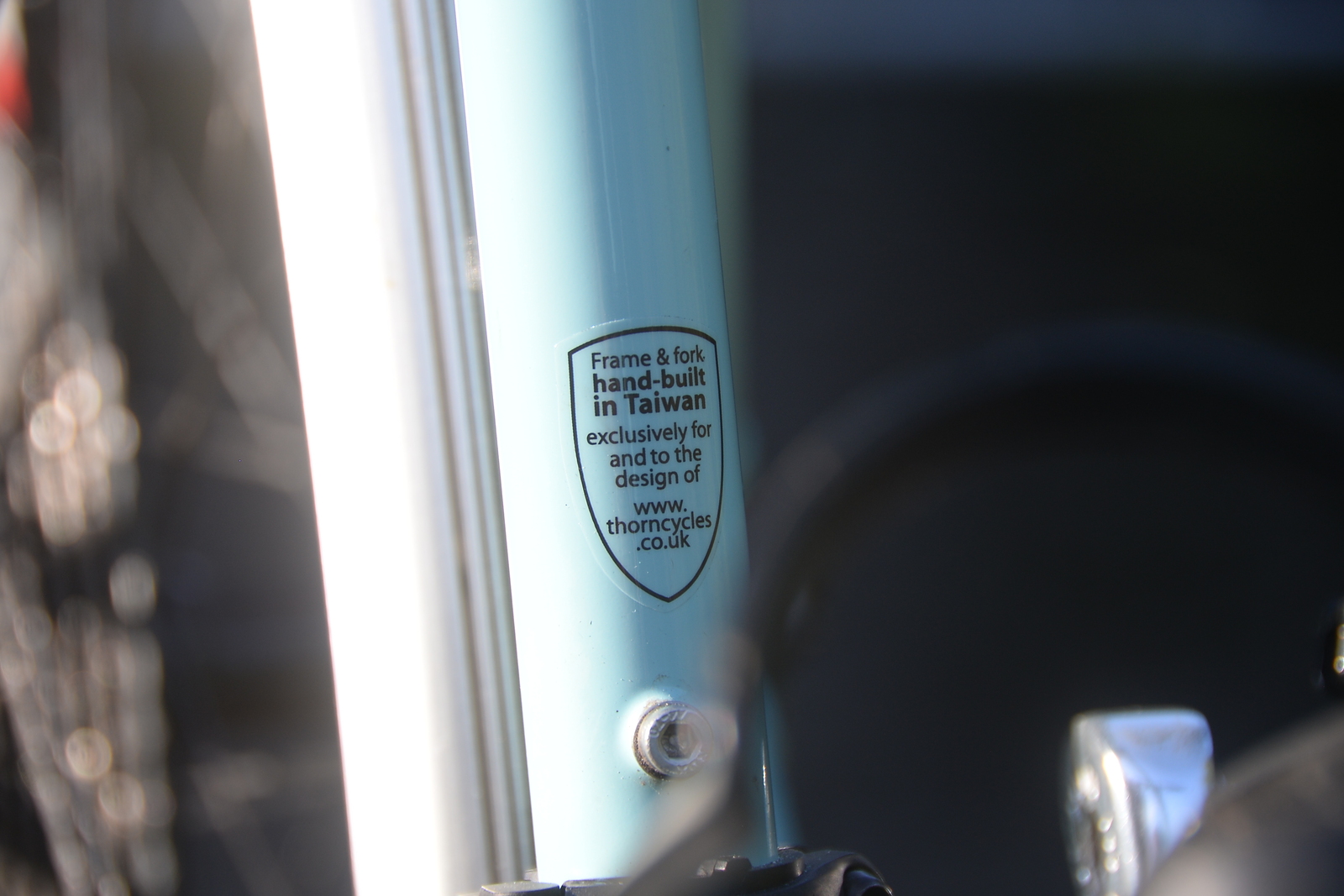
The frame is Thorn 969 double-butted, seamless, heat-treated, cold-drawn, Cro-Mo steel, with not a chip or other mark on the paintwork anywhere, even underneath the bottom bracket, chainstay. The blue paint on either side of the top tube is faintly yellowed but this is really slight and barely visible in the photos, however it’s only fair to mention it here (unclear what caused it but most probably sun-cream slightly tinting the paint).
COLLECTION / DELIVERY: if you cannot collect the bike, it will be sent by a courier service. In that case the bike will be supplied partly dismantled in a bike box (wheels off, pedals off, handlebar twisted round, or off, etc) so you will need to be confident about re-assembling it, or pay a local bike shop to do that for you. If you live within about 100 miles or so of Edinburgh, we will be happy to deliver it, fully built-up, for cost of fuel only.
* Security: as this is a valuable bike, it has a hidden, non-removable RFI 'Immobitag' which means if lost or stolen, police can trace its registered owner - registration will be transferred free of charge to the new owner. This is much more secure than the frame number. If sent by courier, a tracker will also be placed in the box.
Detailed specification:
frame & fork:
Thorn Sherpa MK3 Frame - blue - 475M for 52 mm forks - in 969 double-butted, seamless, heat-treated, cold-drawn, Cro-Mo steel. Frame number SH475M1603
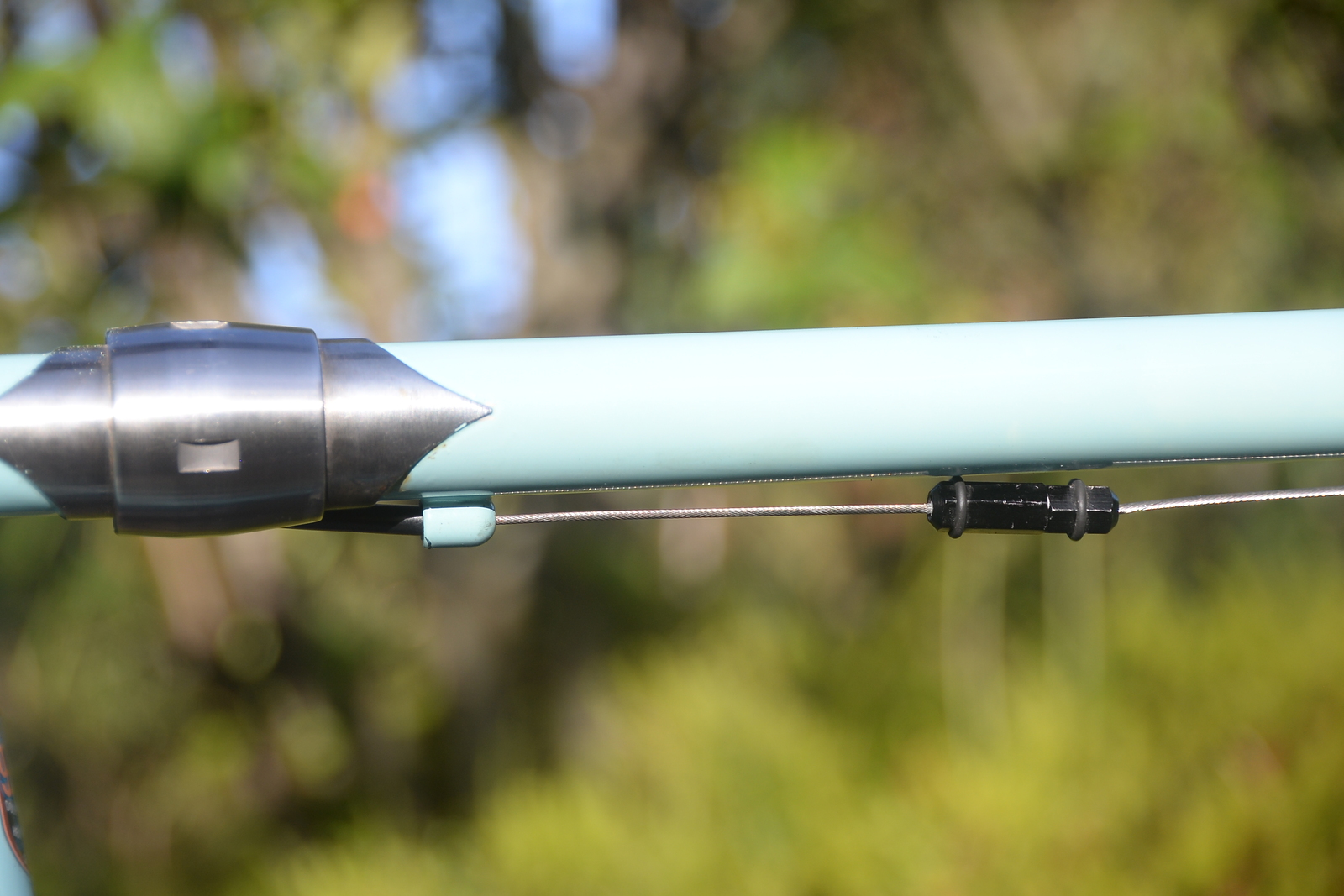
Frame fitted with S&S couplers, special spanner included. Rear brake cable fitted with JTek cable splitter/coupler to facilitate disassembly and reassembly of the frame.
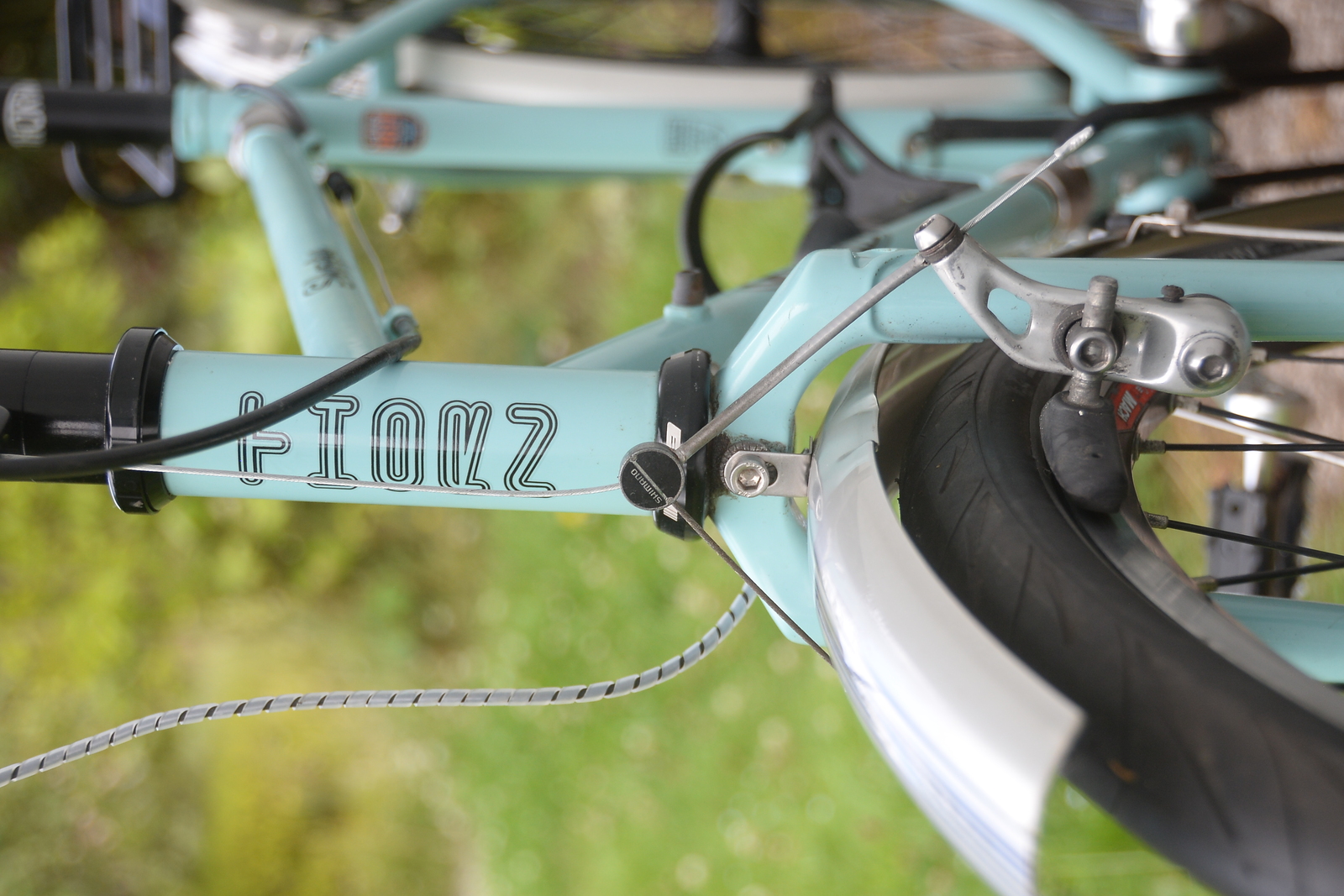
26" Thorn ST26 steel fork - blue - 52 mm offset
wheels:
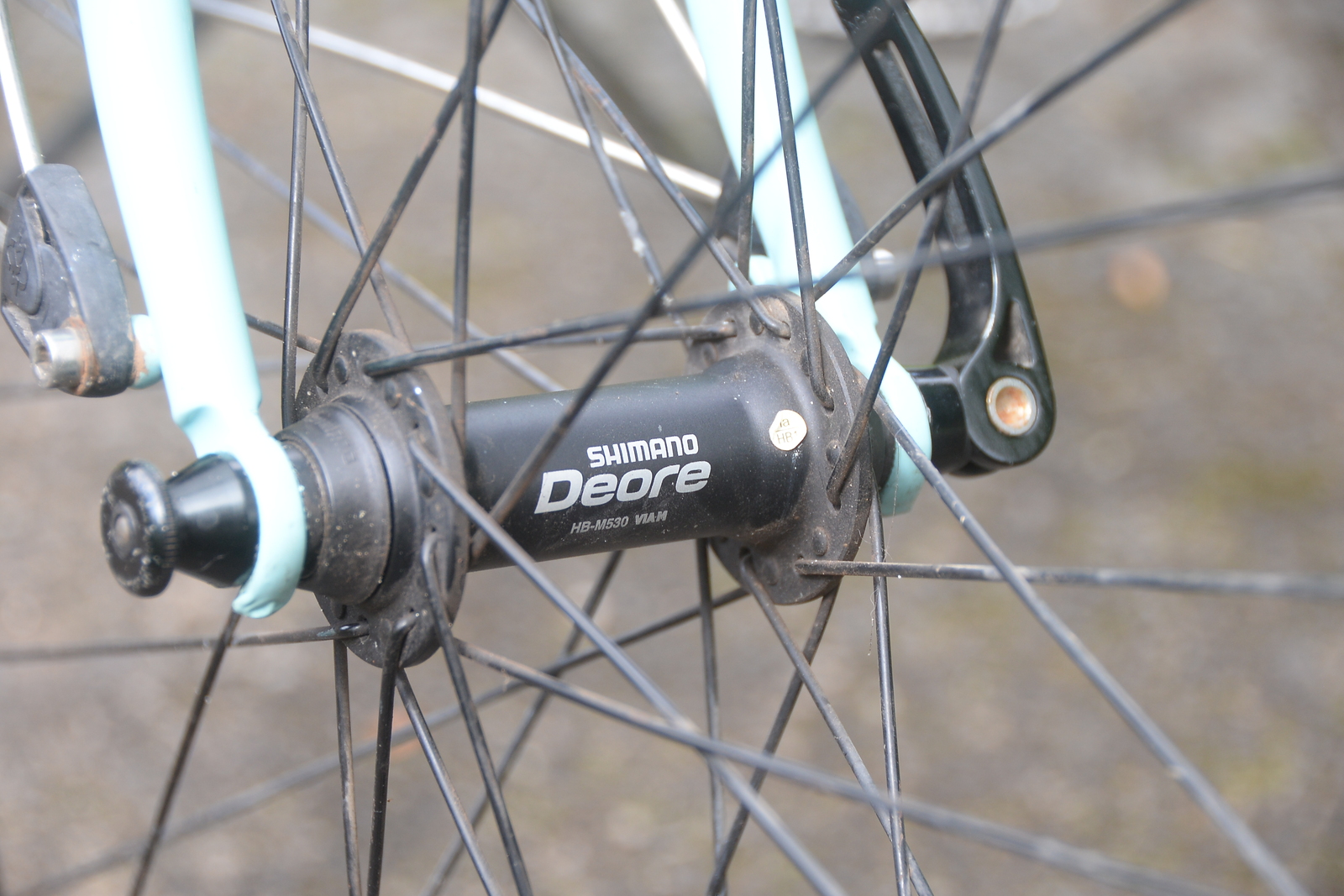
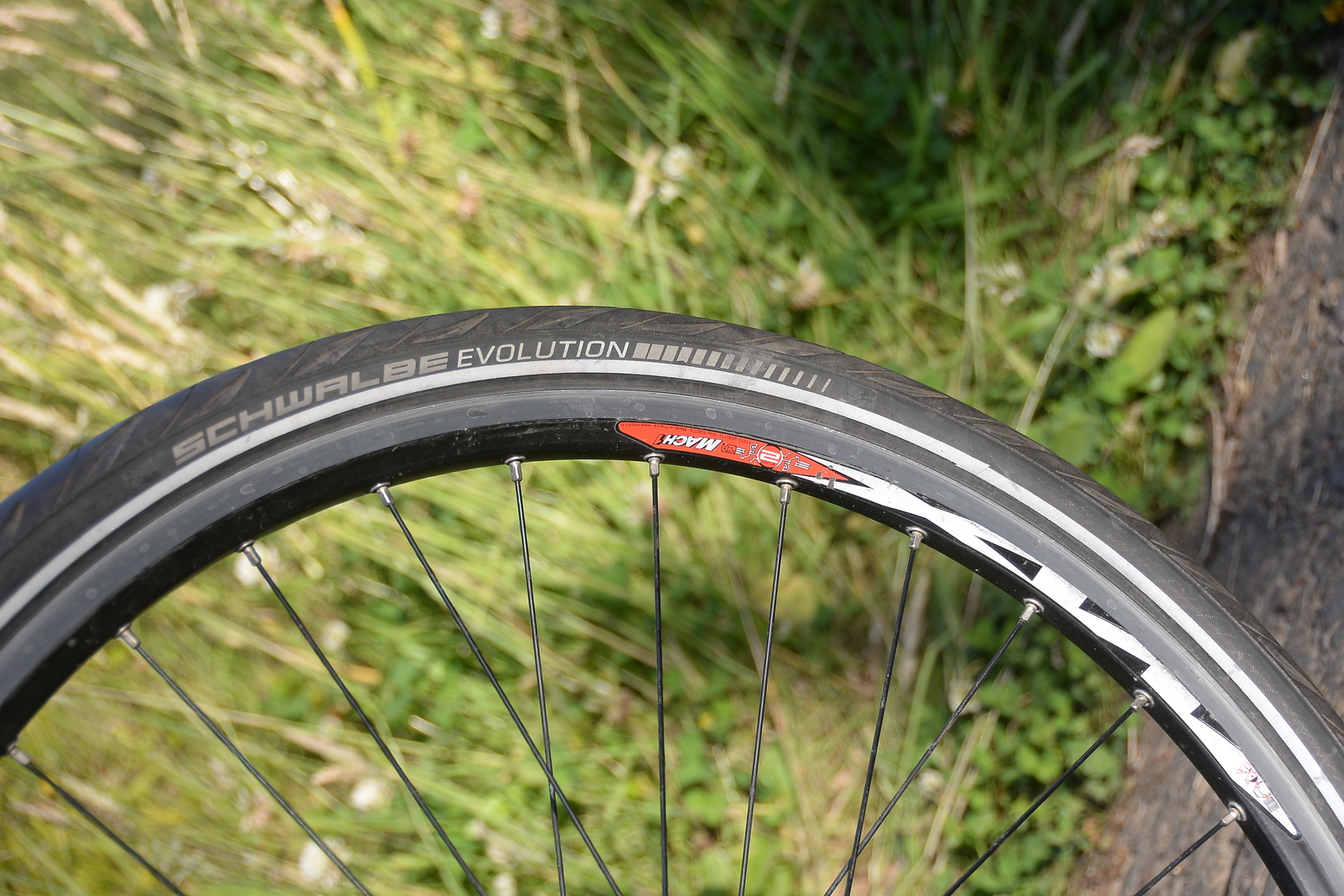
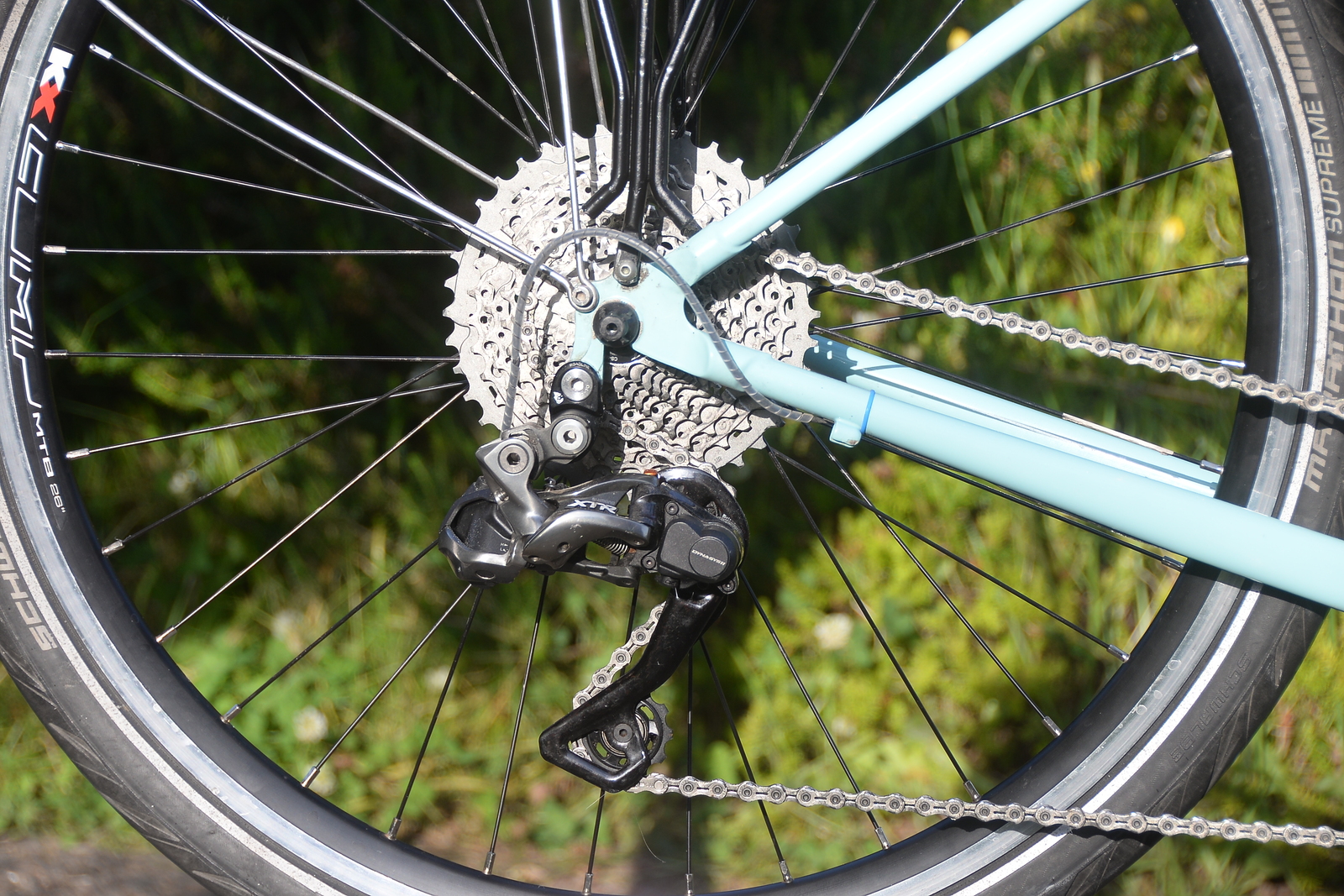
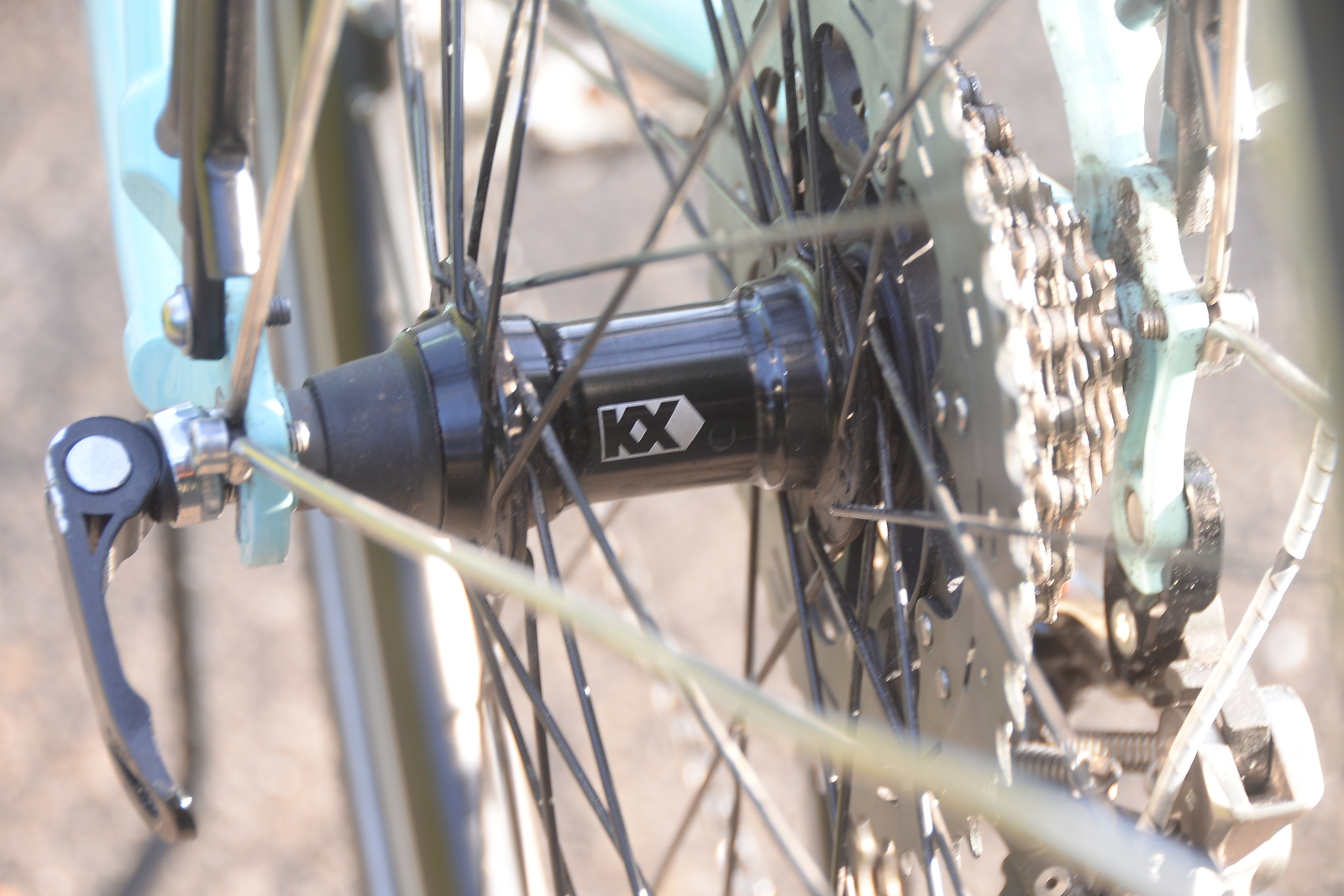
26"/ 559 aluminium 36-hole rims in black: front MX Mach 1 Evo2 with Shimano Deore hub; rear KC Comp on KX hub
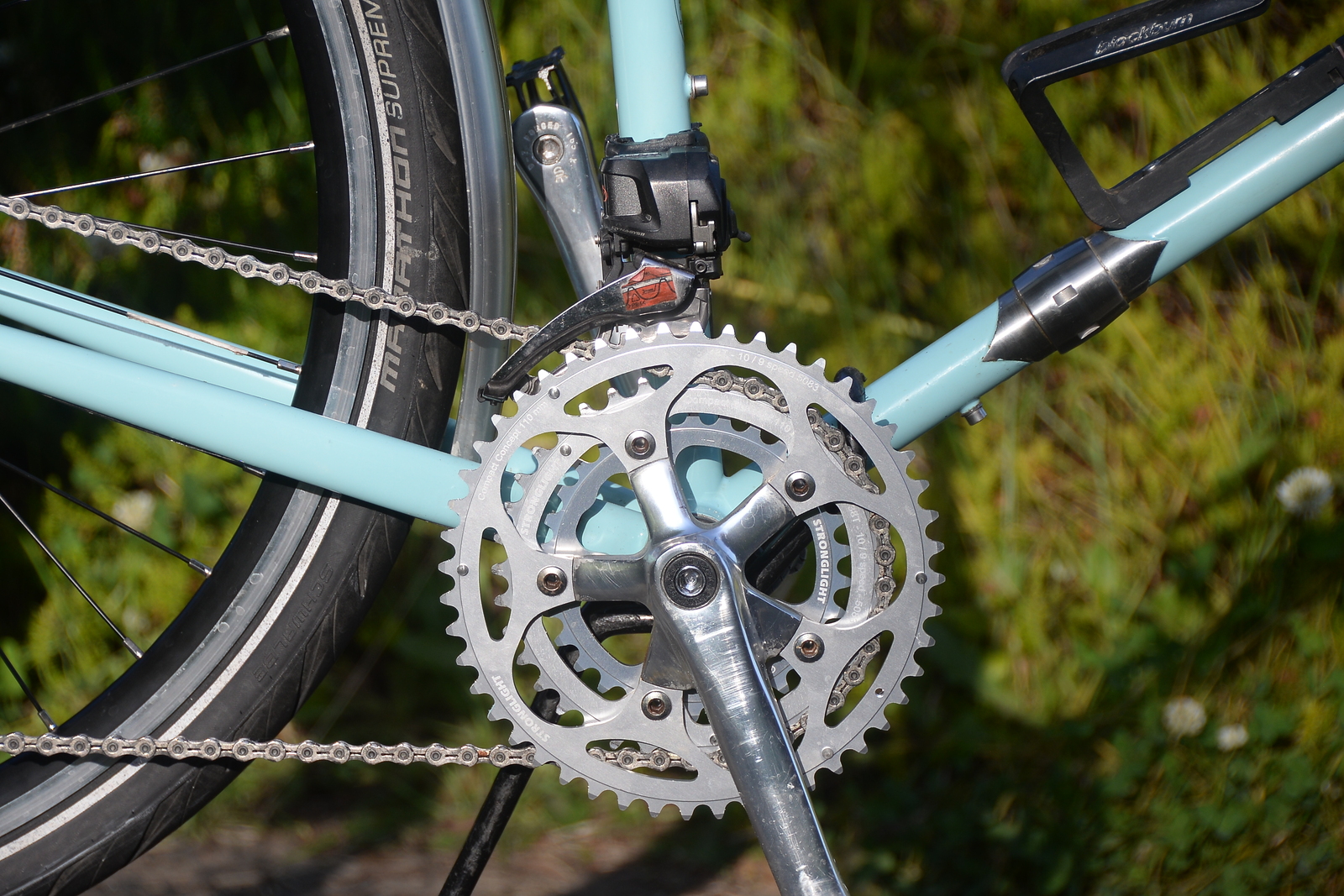
tyres: Schwalbe Marathon Supreme HS382 Folding Tyre - 26 x 1.60 Inch , 42-559
drivetrain:
3x11 speed ultra-wide gearing, 165 mm cranks, giving a huge overall range of approximately 17 to 108 gear-inches, more details below
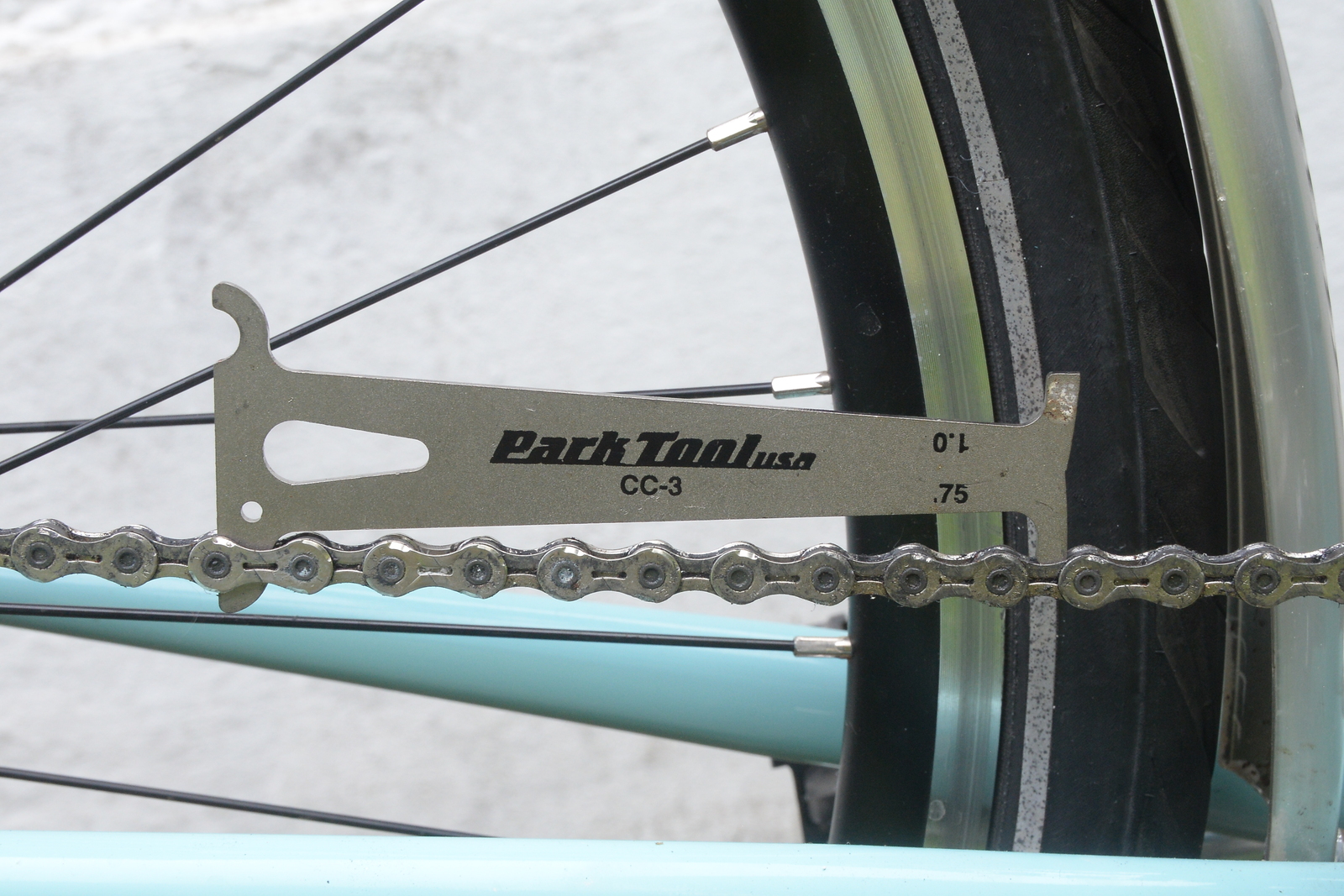
KMC 11-speed chain, Silca waxed, with “missing link” connector, near-new and less than 1.5% wear (see picture)
Shimano XT CS-M8000 11 Speed Cassette - 11-40T
Spa Cycles 104/64 PCD triple crankset, silver, forged alloy 165mm cranks, 48/38/30T
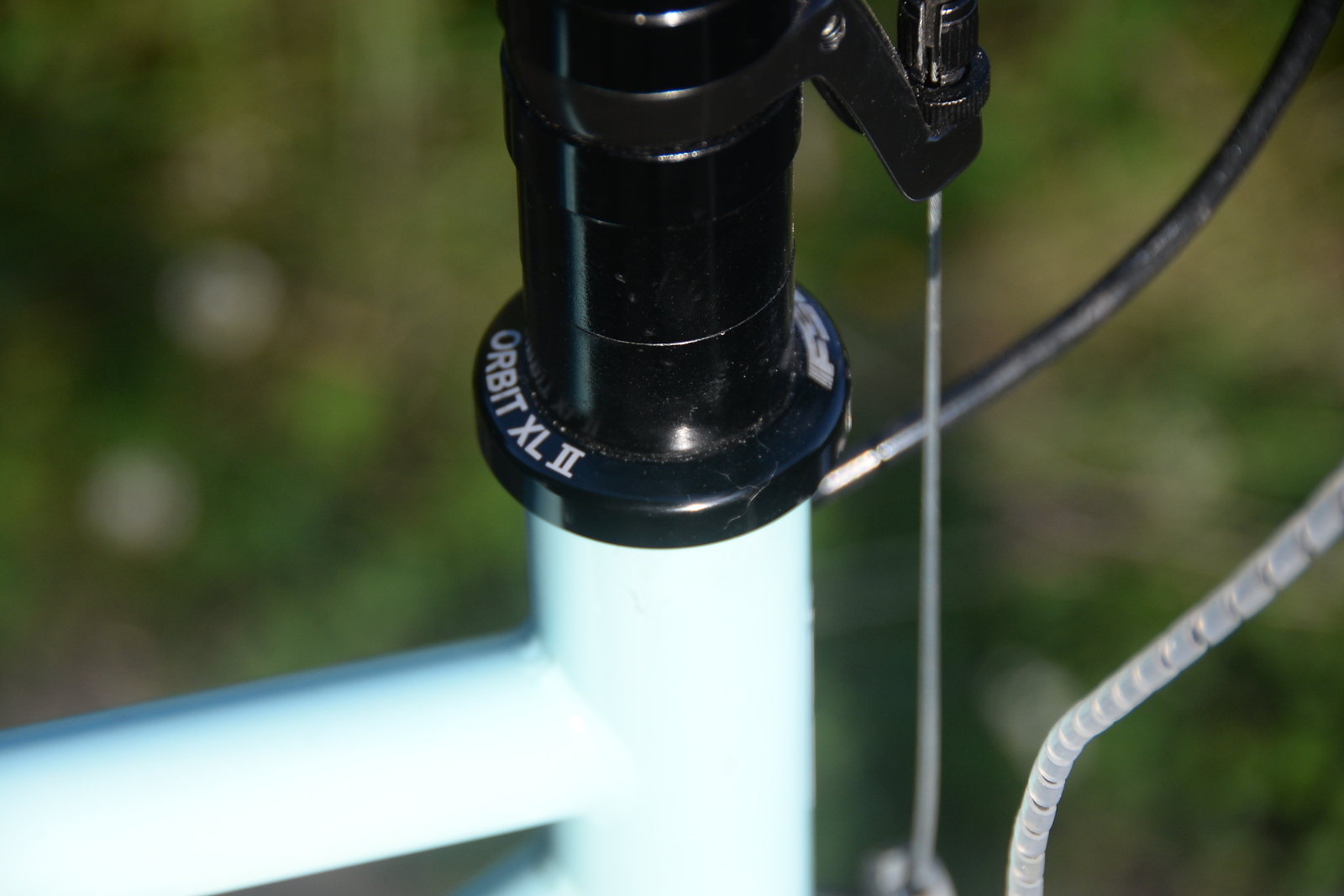
bottom bracket: 68mm shell English thread sealed cartridge taper spindle
Di2 electronic gear system:
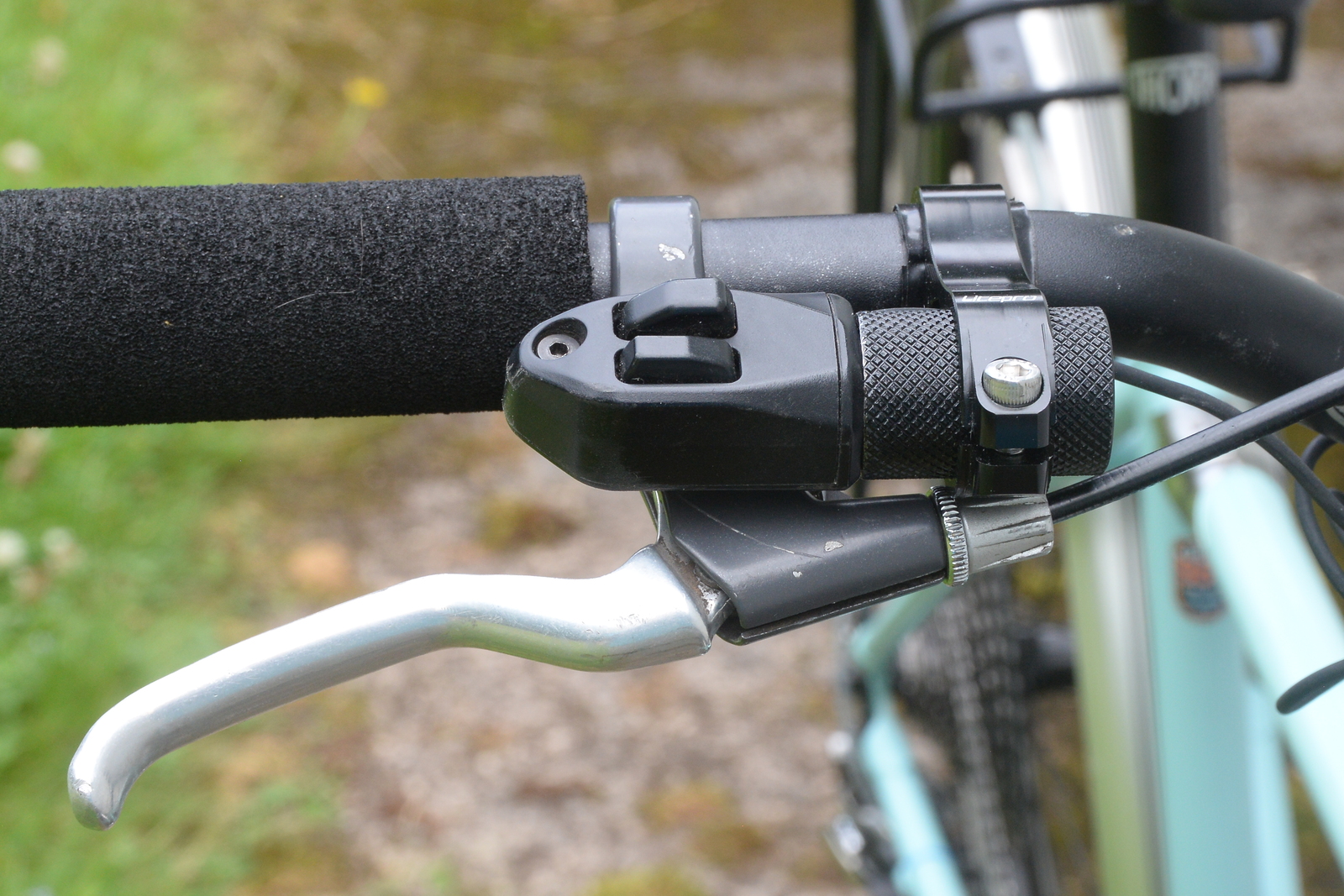
Shimano SW-R671 TT shifters, chosen as they are easily operated with fingers, mounted on custom brackets and readily re-positioned to suit rider
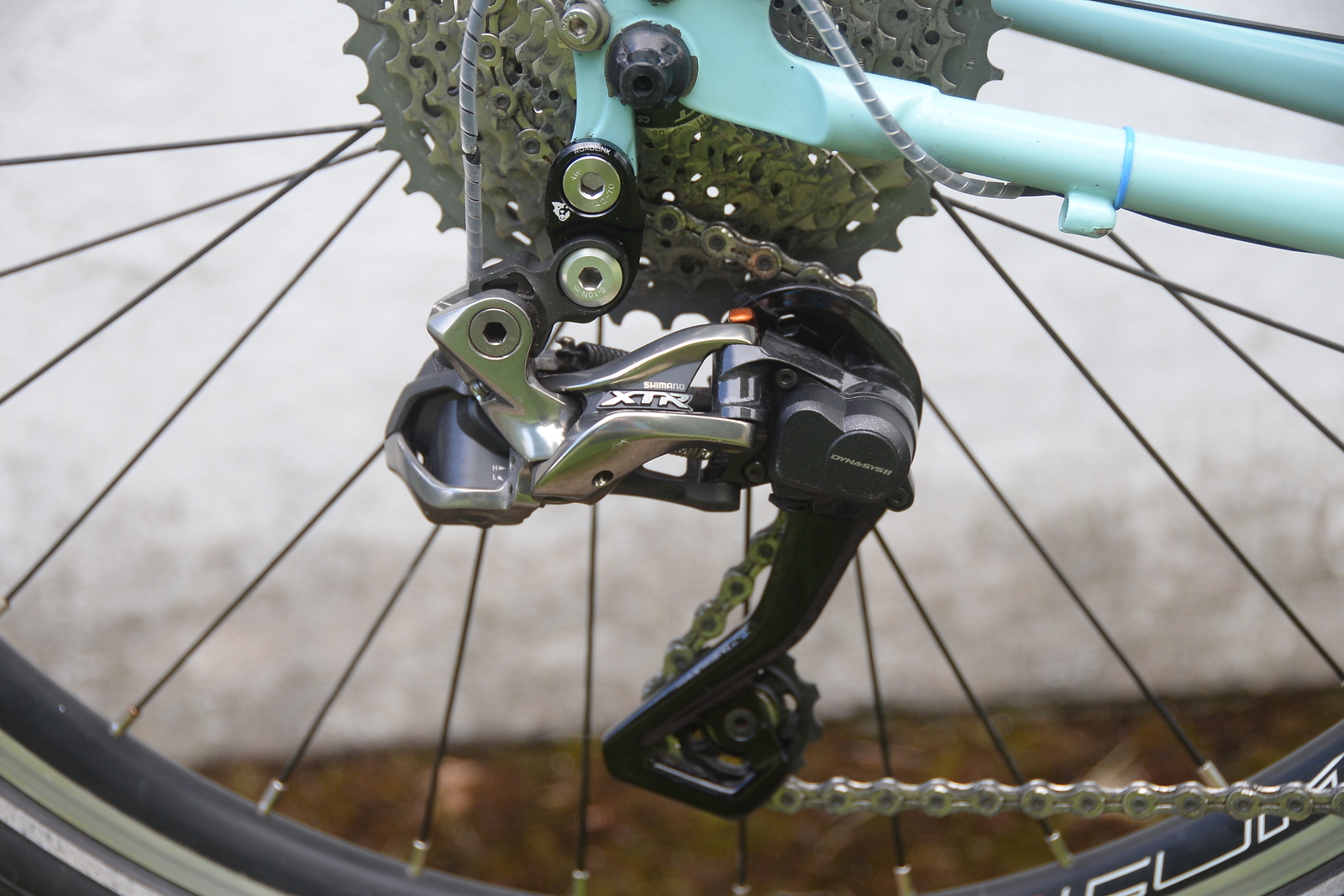
Shimano FD-M9050 front derailleur, mounted on Shimano SM-FD905-H high clamp adapter
Shimano RD-M9050 rear derailleur, mounted on Wolftooth Roadlink to extend cassette capacity
Shimano DN-110A battery, mounted inside downtube just above lower S&S joint
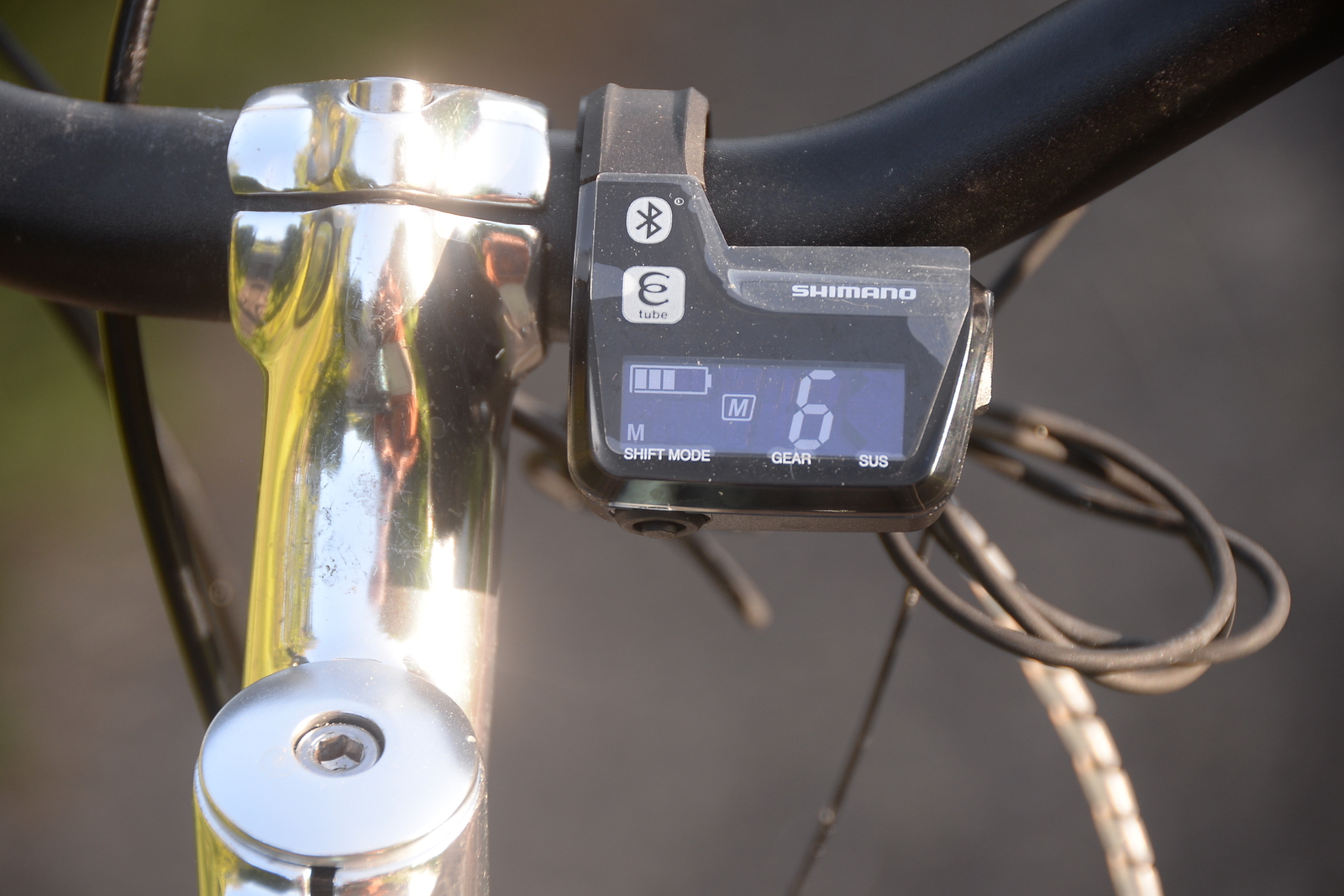
Shimano SC-MT800 information display, handlebar mounted, shows selected gear, enables choice of synchro shift 1, synchro shift 2, or manual shift, plus wireless connection, battery charging port, derailleur adjustment etc
Shimano 4-port di2 junction B, mounted inside downtube just below lower S&S joint
Shimano Di2 wires throughout, routed internally where possible, with extra protection for external cables (“spirowrap”, see pictures)
Shimano SM-BCR2 battery charging adapter and PC link interface – mains powered, USB socket for charging lead or connection to windows PC (leads included)
Shimano TL-EW02 wire connection/disconnection tool
brakes:
Shimano ST-MC12 mechanical brake levers, right and left, with mechanical gear-shifters removed
Shimano Altus cantilever brakes, front and rear, with Aztec brake blocks
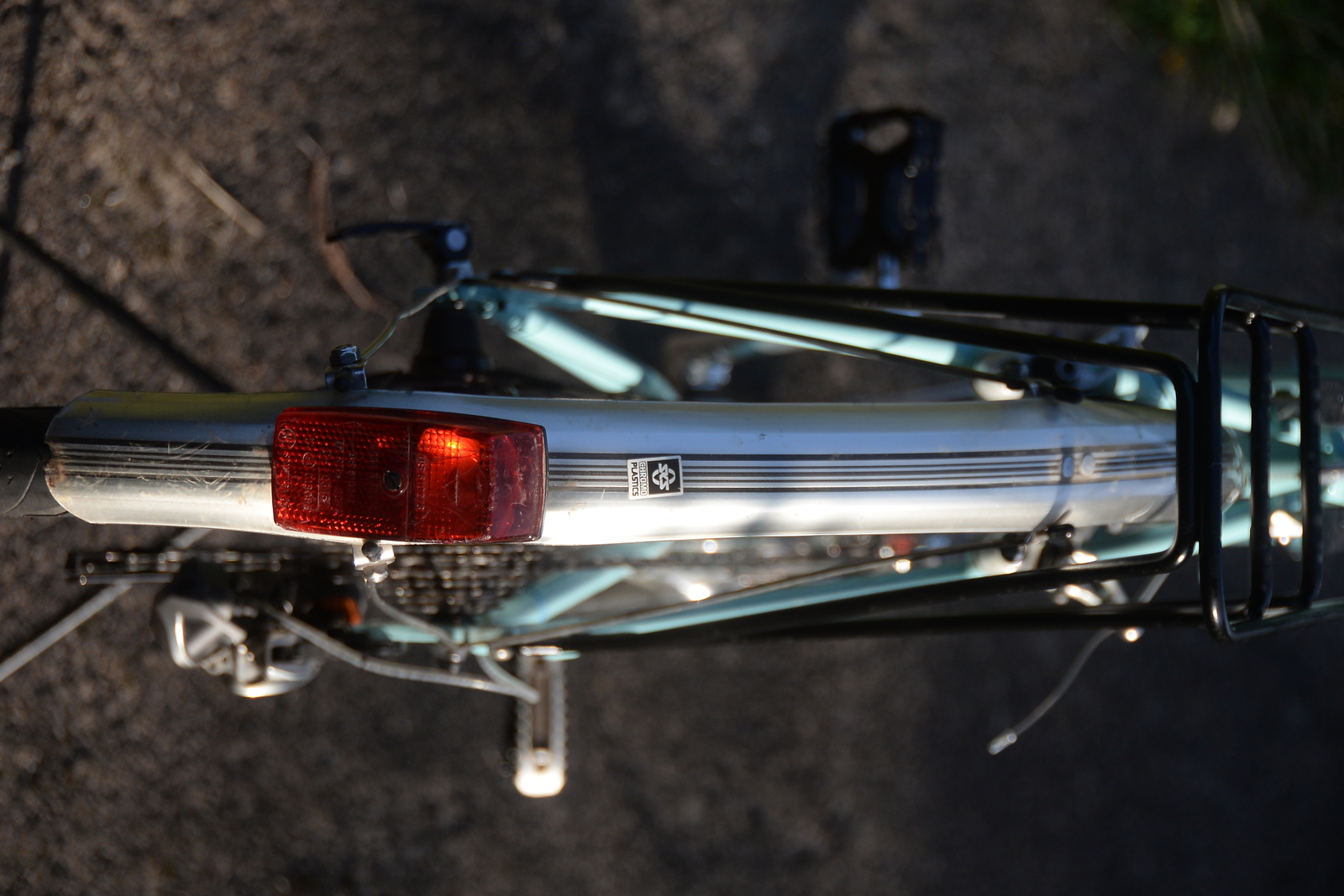
SKS chromoplastic Mudguards - 26 Inch - P55 – Silver (a bit weathered but not cracked or split)
Blackburn alloy rear pannier rack in black
saddle:
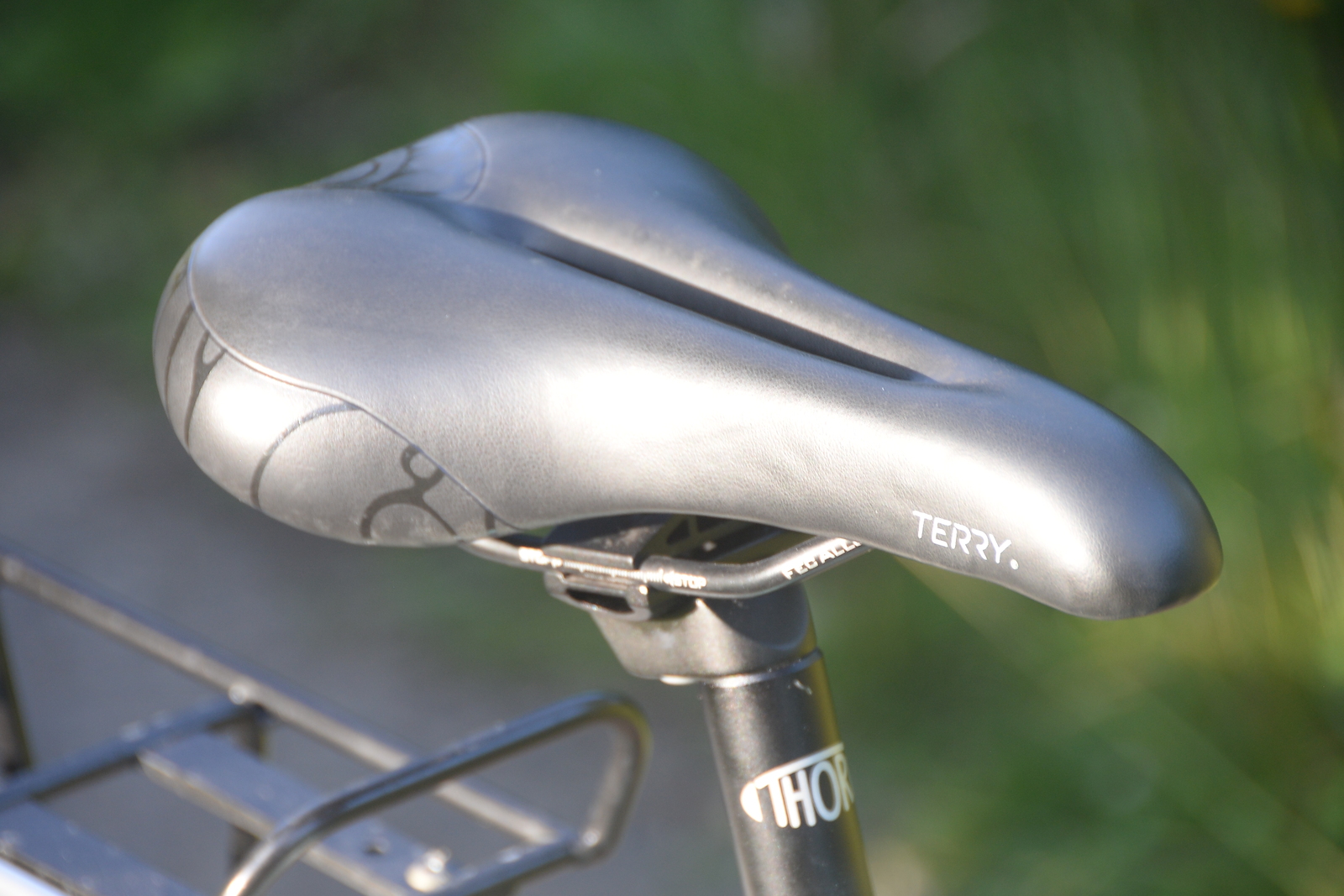
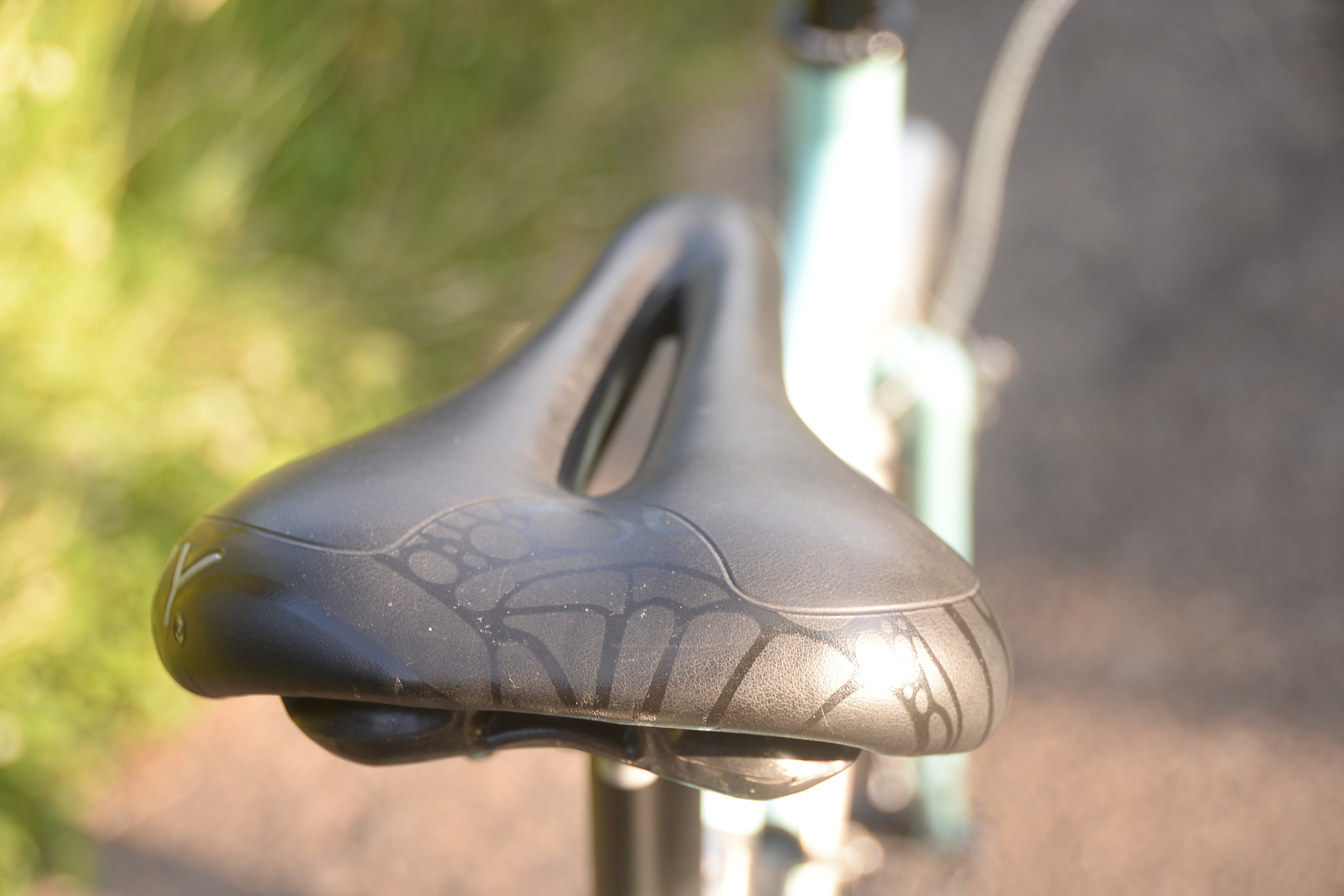
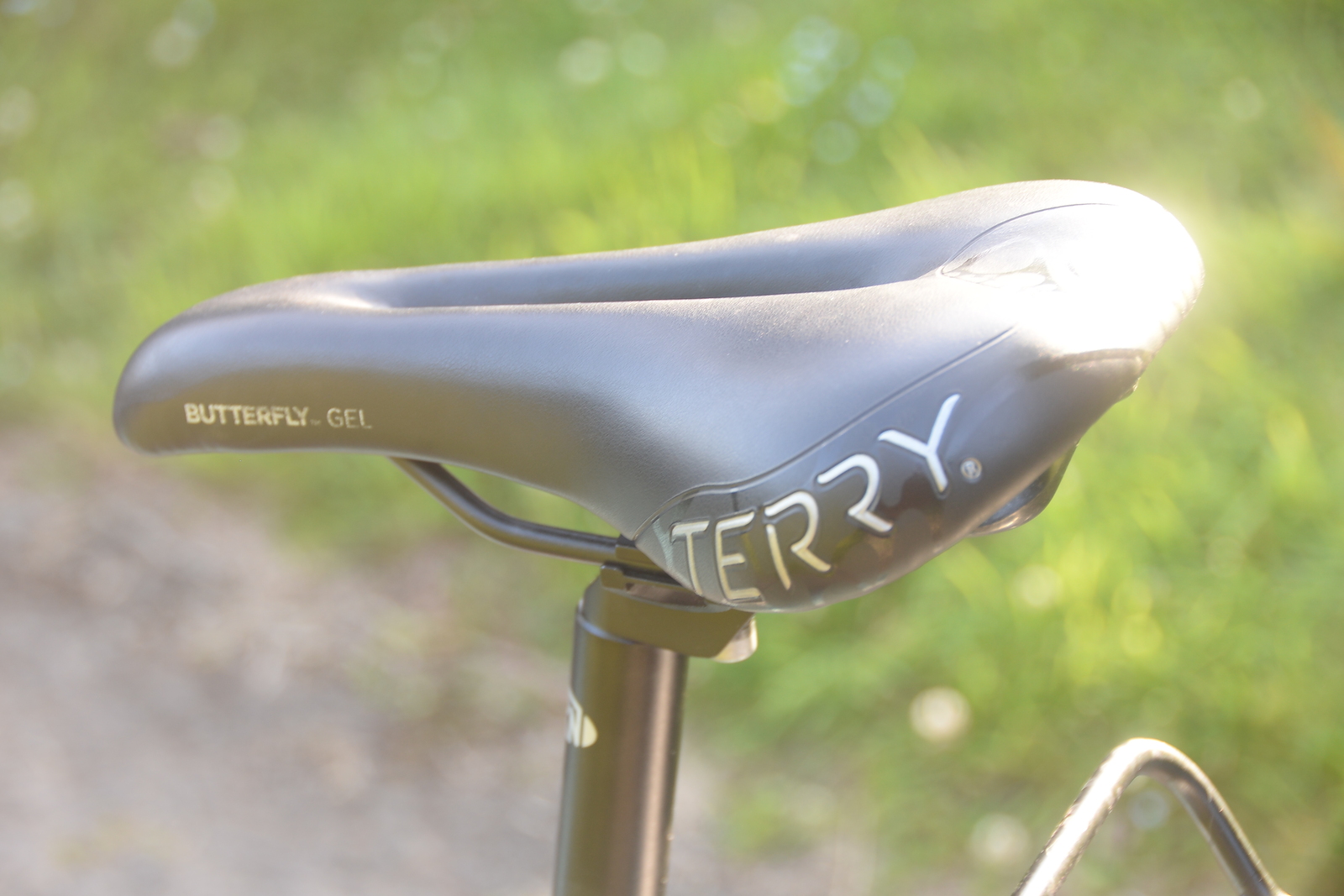
new Terry Butterfly Gel woman’s one, but it’s assumed whoever buys this, male or female, will need their own personal favourite anyway.
handlebar:
traditional swept back horizontal style. HOWEVER you can choose one of the alternative handlebars shown in the pictures and my partner will fit it before sale, using the same grips, levers etc. Alternately if you choose the drop bars, he will fit those with Shimano di2 combined brake lever/gear shifters instead of the levers and shifters shown in the pictures. choose one of the alternative handlebars show in the pictures and my partner will fit it before sale, using the same grips, levers etc. NB no cost for the fitting.
Manufacturer's description:
"The Thorn Sherpa is a 26" derailleur equipped bike, it is intended for use with drop bars or straight bars and depending upon fork, with light to heavy loads.
We’ve been honing the design for over 15 years, yet the Sherpa could accurately be described as the NEW traditional touring bike.
The Sherpa can be used for day to day transport, or it can literally travel the world.
The Sherpa’s very stable and it handles superbly. There’s no possibility whatsoever of accidentally overlapping feet and mudguards. Whilst the bike is extremely comfortable to ride, it can carry 28Kg of luggage and still handle brilliantly. It will cope with 40Kg when required.
26” wheels are the best possible choice for heavily loaded touring.
The 26” MTB wheel has a vast variety of different tyres available and tyres for this size are obtainable in every country in the world!
The Sherpa has clearance for 2" tyres. Some 26” tyres are for MTB use, some are heavy duty for expedition use, whilst others are very quick indeed!
We love to cycle on B roads and country lanes. These roads are in worse condition today, than anyone can remember. On these roads, fat tyres, which are zero-maintenance suspension, make great sense. They make just as much sense in the pot-holed streets of today’s cities!"
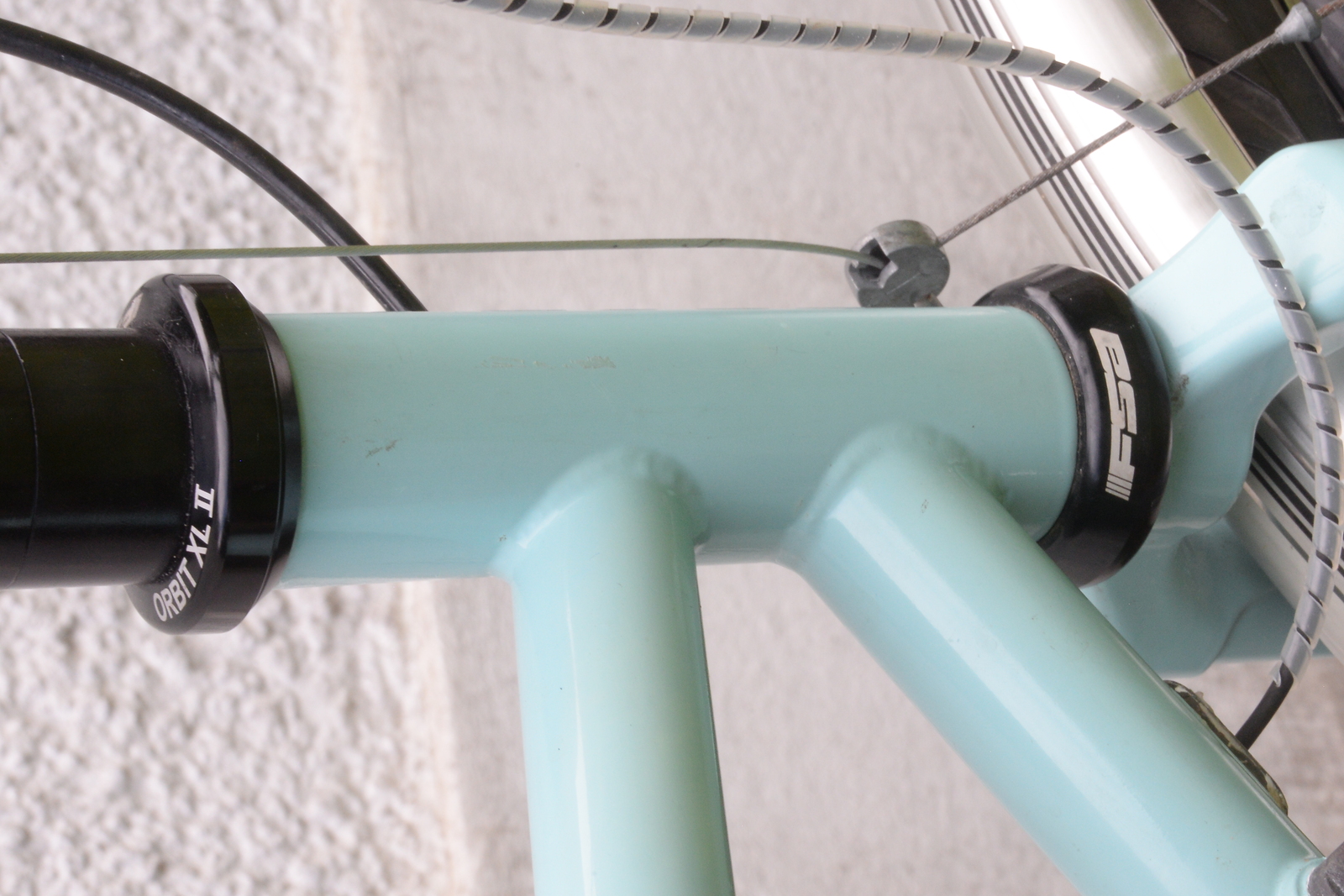
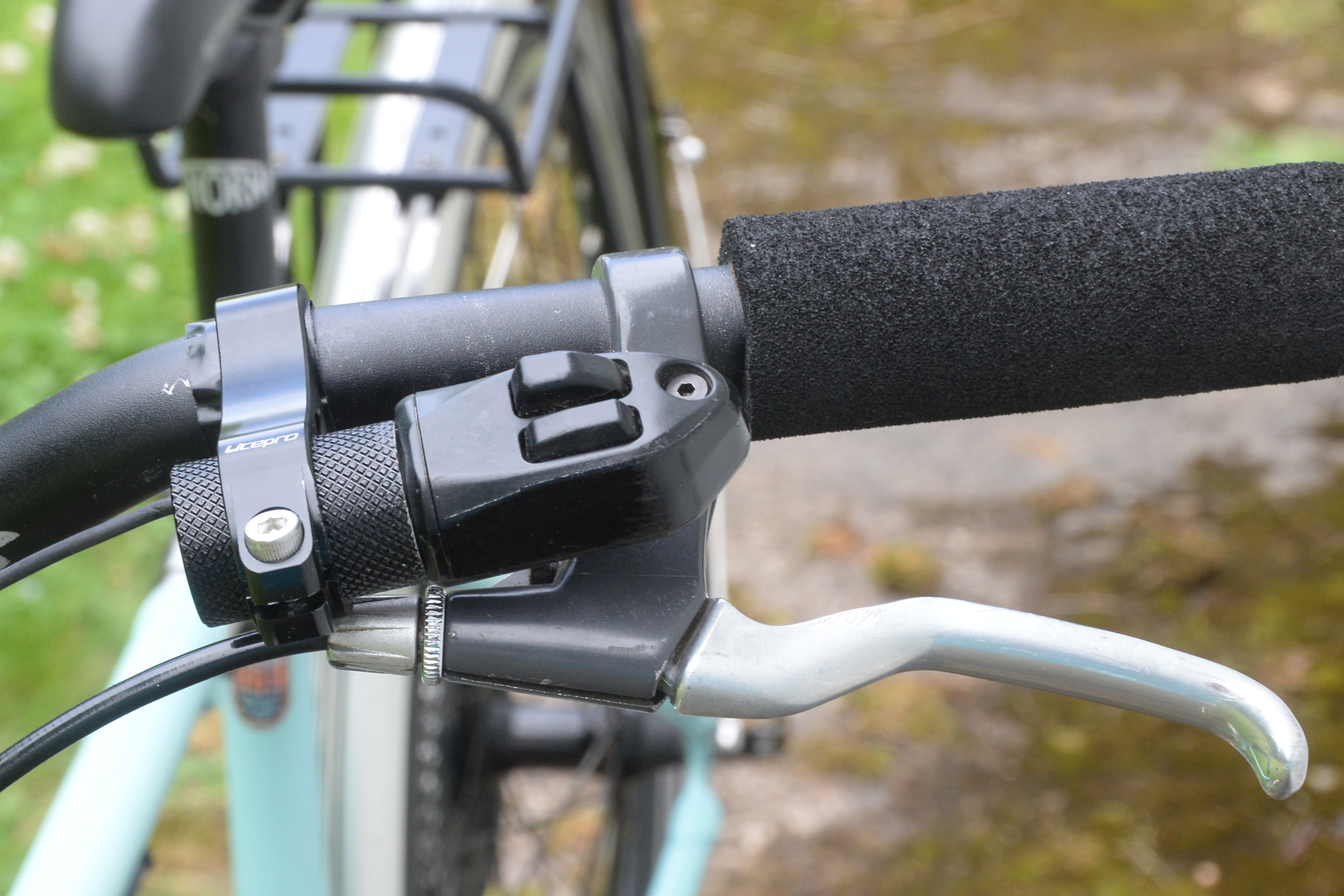

ALTERNATIVE HANDLEBARS
END OF PICTURES!
I've been into hill-walking since returning to college in 1989-90 for my postgraduate diploma in broadcast journalism, encouraged by my fellow-students, and (surprisingly) finding it a great cure for the vertigo I'd suffered from childhood.
One day I'll get round to posting some pictures and more details here. Suffice it to say for now that I've walked countless times the fells of the Lake District, the edges of the Peak District, hills and mountains in Scotland and the Mediterranean, and perhaps my favourite of all, Tryfan and surrounding mountains in north Wales. Plus abroad in France, southern Spain esp the Sierra Nevada, Majorca (the north-east, away from club-land and other hot-spots!), La Gomera, Lesbos, etc.
When I read in Mark Beaumont's fascinating account of his ride down the length of Africa, that his electronic gear-changing had stopped working, I was a bit scornful. Electronic gear-changing on a touring bike, through countries where you could be hundreds of kilometres from anything resembling a bike shop? As someone who comes from the steel frame, keep-it-simple-stupid school of touring cycles, it seemed a pointless luxury.
However it planted a seed in my mind and when my partner developed osteo-arthritis in her thumb joints, such that riding for a full day became almost impossibly painful because of repeated gear-changing, it set me thinking. Drop-bar shifters, finger-operated, might work for some people but an old back injury rules out her using drops. Surely electronic gears, operated by push-buttons, might be the answer?
It took a lot of research, because there isn't a straightforward off-the-shelf answer, but we got there eventually and the system had its first real trial on a 1200 km tour of eastern and north-eastern Thailand in January-February 2018. The system worked superbly, faultlessly throughout, and painful thumb joints were a thing of the past, at least as far as cycling is concerned. So here is a summary of what I put together for her.
The bike
This set-up would apply to many touring bikes, but in this case it was a new Thorn Sherpa, and we took the bare frame to Ben Cooper at Kinetics in Glasgow for S&S couplings to be fitted.
The gearing
The first problem was that Shimano basically has two set-ups, one using a single or twin crankset, aimed at roadies, the other a triple, for mountain bikers. Unfortunately neither offers the range of gearing needed for touring on a heavily laden bike. The Thorn Sherpa had come with a triple on the front - 48/36/26 - and an 11-36 10-speed cassette on the rear, which with 26" wheels and 165 mm cranks, gave a lowest gear of 18.8 in and a top of 113.5 in.
However Shimano's front triple di2 deraiileur (FD-M9050) specifies a maximum of 40 teeth, fine no doubt for MTBs but no use for touring. But digging around forums and blogs produced examples of set-ups running much bigger chainrings. It would simply mean moving the mounting up the seat tube to suit, and not worrying about the fact the curve on the cage would not follow the chainring as neatly. And clever though the di2 system is, it only knows you have a triple, it doesn't know what size rings you're using.
So for the front I settled on the M9050 deraiilleur and a 30-38-48 crankset (to suit max capacity of 18 teeth), compatible with 11-speed chains, from Spa Cycles. Why 11-speed? Well the di2 system offers a lovely refinement called 'synchonised shifting' where you can use a single (2-button) shifter switch to go through the full range of gears, with the electronics changing the front ring as well as the rear sprocket whenever necessary. And the change points are user-programmable (see below).
For the rear I chose a Shimano Deore XT 11-40 11-speed cassette, CS-M8000, and that in turn meant a new rear wheel as the 11-speed cassette mounting is a different length from the 10-speed that was on the Thorn*. Again I got the wheel from Spa Cycles. The rear derailleur was the di2 RD-M9050-GS, which posed another potential problem as it specifies a total gear variation of 35 teeth, but this set-up was now 29 on the rear and 18 on the front, totalling 47. Fortunately this is where the di2 system scores again, for by default it blocks out the two worst combinations (smallest chainring to two smallest sprockets) and it's easy to block off more than that. Consequently it would be a simple matter to restrict the chainring-sprocket combinations to stay within the capacity of the derailleur. This all gave a lowest gear of 19.5 in and a top of 113.5, which she was happy with.
(*and I had another use for the old wheel, so didn't need to mess about with mating an 11-speed cassette to a 10-speed hub)
Selecting gears
The next challenge was what to use to operate the system? I had expected to use the di2 MTB Firebolt shifter, SW-9050-R, but when it arrived it was clearly designed to mimic a mechanical one, with heavy spring loading that would pain my partner's thumbs in the same way. Drop-bar shifters were out, and some of the other di2 shifters only work as plug-ins to drop-bar levers. However the SW-R671 Aero/TT shifter looked promising. It's meant to plug into the end of a tri-bar, but it wasn't too difficult to fabricate a mounting, using a section cut off an old handlebar, a block of wood shaped to hold it parallel to part of the bike's handlebar, and a re-shaped jubilee clip to hold it all together, a coat of black paint going some way to hiding the Heath Robinson nature of the mounting. An advantage of that was that it was easy to adjust its position so that she could operate the two buttons easily with her fingers (not her thumb).
Installation - derailleurs and cables
I was reluctant to go for an external battery and wiring, both for reliability while touring and to minimise the attraction to thieves, reasoning that the more the system was concealed the better. However the Thorn frame did not have sufficiently large holes around the bottom bracket to use Shimano's recommended installation, which sees the 2 derailleur wires, the battery wire and the wire to the front end all coming together in the 'junction B' connector which is then stuffed up the bottom of the seat post. A chat with Ben Cooper (Kinetics) produced a neat answer, which was to make use of the lower S&S coupling to stuff the battery up the down-tube and put the junction B adjacent to it, with the wires emerging through custom holes that he created, with brazed reinforcements.
I first connected up the derailleurs, battery, junction B, handlebar display (9500) and switch, all off the bike, then charged up the battery and tried it out. It all worked beautifully so the next step was to install it for real. The rear derailleur fits as any rear derailleur would, but note that it has a bronze coloured lever which should be in the OFF position until installed and the wheel is in place, then moved to the ON position. This is because the di2 derailleur spring is a lot stronger than a mechanical derailleur - moving that lever to the OFF position makes removing and refitting the rear wheel a bit easier.
A di2 wire ran along the chainstay, protected by Shimano's own wire sheath, and given extra support with a couple of small cable-ties, round to the access hole and into the bottom end of the down-tube, choosing a route that minimised the risk of any damage in use.
Similarly the I fitted the front derailleur, adjusting its position to as near ideal as possible, given the slight mis-match (as noted above) between cage shape and chainring size. I chose a top-mount clamp but a bottom-mount clamp would work equally well - it just depends on your bike frame, and in particular if you have any bottle-mounts in the way of either clamp. That wire similarly fed down the tube an in through the same access hole
Front wire, battery and junction B
I fed a long wire into the down-tube and down to the S&S coupling, then pushed the battery, with its wire attached, up the tube. All 4 wires, from the rear derailleur, front derailleur, battery and front, then plugged into Junction B (in any order). I also modified a pair of ordinary tweezers to make a tool that would allow me to grab the battery, using the groove at its bottom end, and remove it if ever necessary. Finally I carefully stuffed the wires and junction B into the lower down-tube and put the two parts of the frame together, tightening up the S&S couplings.
Handlebar fittings

The front wire I took to the wireless adapter, mounted under the stem, with another wire to the handlebar display, which also takes the wire from the selector switch. With a bit of tidying up using cable spiral wrap, that completed the installation.
Setting up
Many descriptions of the di2 system bemoan the limited capability of the SM-BCR2 charger for internal batteries, which connects to a PC but supposedly doesn't allow you to customise the system. Well that may have been the case, and if so then Shimano has relented because I found that was all I needed to update firmware, allocate functions to switches, and above all to customise the gear-change program. There are still a few things, like interrogating error messages, that require the much more expensive PC interface, but mostly they will only concern dealers, and so far I've not needed it.
Once all the firmware had been updated, I found the 9500 display seemed to have all the capacity of the later 9501, and was able to set about the adjustments, and this revealed more problems.
At the rear, there is a range of adjustments to line up the chain with the sprockets by shifting the derailleur but I was concerned to find that I was right at the limit of adjustment. After a close examination and a bit more research, I realised that the axle had a rather thick washer pushing the cassette away from the derailleur, and swapping it for a thinner one (still a proper Shimano axle washer) meant things lined up rather better, close to the middle of the adjustment range.
The front was worse, with the middle chainring nowhere near lined up even at maximum adjustment, and it was clear I needed a longer axle. The bottom bracket was an 80mmx 112, and by unscrewing the bracket until the chainring lined up I could see I needed about 5mm more on the crank side, and obviously the same on the other side, ie a bottom bracket of 80 x 122, which did indeed give me perfect alignment.
With everything in place, it only remained to test it on rollers, first by hand then pedalling, and it was a revelation, smoother and sharper than I'd imagined possible.
Long-term trial
Out on the road it became apparent that it was changing too readily from the middle to the larger chainring, so I re-programmed it to stay on the middle until all those gears were used up, and it only occasionally goes onto the large ring for the fastest sections, or the small ring for the climbs.
Other than that, in hot, dusty conditions in Thailand, on roads that varied from good tarmac to loose gravel and sand, it performed faultlessly over 1200 km, and didn't even need a battery charge.
Other observations
My partner never used the handlebar display at all, happy to simply shift up and down until one or other limit was reached. I considered swapping it for a simple Junction A box but found, again contrary to info elsewhere on the internet, that it doesn't allow you to select synchronised shifting, so the display stays.
As well having the e-tube app on her phone, to customise the system, I took along a Windows 10 tablet with the e-tube Project software, and the charger/interface, but as it turned out, the system needed no attention at all. Still I'll do the same for future tours.
I had a second selector switch so she could have one on each handlebar, and the option of operating in non-synchronised mode, but we never used it, though again I'll take it along as a spare.
Cycle-touring is for me the best way to visit a country and get to know it, other than living there for a long period. It takes you off the tourist trail, in among real people, not insulated as you are in a car, moving quickly enough to cover the ground more effectively than walking, but slow enough to take it all in. In most countries - not all - people are friendly, welcoming and curious about cycle tourists. I've toured in several continents, starting with baby-steps in Europe:
Ireland
Somewhere around 1978, went to Eire with my then-wife and hired bikes in Dublin, cycling south to the Hook (?) covering 20+ miles a day which we thought was quite good.
Fast fwd a few years to early 1980's, now divorced and I took my own bike on the ferry from Liverpool across to Dublin, cycling across country to Donegal. Interesting though a touch featureless and especially bleak over some mountains near the border with the North. Resolved not to do the cross-country again!
A couple more trips to Ireland, especially one to Galway, and on up to Sligo, all quite beautiful in spite of variable weather.
Continental Europe - Netherlands, Luxembourg, Germany, Belgium, France
Mid-1980's took the ferry across to the Netherlands, cycled up to Amsterdam, across through Luxembourg to edge of Germany (Black Mountains?), then back down into Belgium to see Brugges, met two Dutch cycle-tourists, mother and daughter, in a soggy campsite and exchanged contact details. Corresponded occasionally and returned following year to stay at their house for a couple of days before heading north, aiming for Denmark, but weather appalling so took train down to Antwerp and south into northern France. Not a great tourist area! But wonderful working-class family in a very basic camp-site helped me get tent up in the rain and insisted I join large extended family for supper and drinks.
Spain and up the French coast to the Channel, 1997
Launch of a Plymouth-Santander ferry service with cheap deal for foot passenger saw me take that option. Almost wiped-out by a bus in Santander, pulling out and squeezing me against a car - various bits of bike bent but no real injury, and all fixable at the side of the road. Thereafter a great trip following the coast as near as possible until Brittany where I cut across to the Channel. Spanish section a little tricky just because it was June and few campsites fully open, if at all, and also couldn't really follow the coast-line. France far easier, following often beautiful cycle-tracks right on the edge of the beaches. Just one horrendous suspension bridge with no proper cycle provision and no way round. Various highlights like the oyster-catching section, and the salt-beds.
Spain again - Pamplona and the Pyrenees, 1998
Enjoyed Spain so much the previous year decided to return to same area, this time heading over to Pamplona, where I arrived a bit sickly due to a dodgy pot of local yogurt (cuajada?) the previous night. Took a flat for 3 days to recover, and explore the city. Then off into the Pyrenees, where I found why the Irati forest is the biggest and lushest in Europe - it rains a great deal!. Found Spain's only (?) 'vegetarian campsite' where the laid-back hosts finished their game of outdoor darts before ambling over to greet me. Great food. At the highest point, I was higher than Ben Nevis, which seemed good enough.
Kerala in southern India 2006
Quite a few years went by, then with new partner Cathy, a more adventurous and widely-travelled tourer, we went to Kerala, flying in to Cochin Airport, then about 50 miles in searing heat to 'Hornbill Camp' run by the region's greatest bird guide, next to a major reserve. We're not birders but still enjoyed his tour, and 3 days there was the perfect recuperation from the long flight. Then up hill for two long days to Munnar, an old hill-station and still centre of huge tea-plantations. Only problem was endless hassle from Indian men, younger men especially, and as likely to be affluent middle-class as anyone else. Bad enough to put us off ever cycling there again. But apart from that a great holiday. A day excursion took us to 'Top Station', where there wasn't actually much to see, other than impressive views of course, and refreshing local pineapples prepared in front of you. On then to Periyar and the Tiger Reserve, which was closed for the annual Tiger Census (a debatable exercise) but that just meant we used unofficial guides. Saw tiger scrapings on trees, heard leopards, saw magnificient Great Indian Hornbill just a few metres above our heads. Then on back down to the Backwaters at Alleppey, for another few days total relaxation in a little cottage run by a very nice local couple.
Thailand, Laos and Cambodia 2009
Flight to Bangkok, then local flight "Royal Silk Class" with silver service to Ubon Ratchatani, where people were surprised and delighted we had chosen to start our trip there. Found a local cycle repair man to straighten my new back wheel, mangled by the first airline - he fished out a truly ancient wheel-jig, and also made use of the u-channel for the sliding door to bend the rim. Two days across eastern Thailand showed we should come back some time for a full tour within the country. Lovely people, yet the Laos turned out even lovelier! Friendly, interested, courteous, never hassling us at all. First stop Pakse, then headed south alongside the Mekong, crossing over to Champasak for second stop and a day at the ancient temple site. Then south again along dirt roads that turned into an epic, as the road disappeared where a new bridge was being built, then beyond that all habitation ended. And the map didn't match the road. We had got used to the idea we were going be benighted (though going off-road still dangerous due to unexploded mines). Finally came upon a small town by the Mekong, which we crossed again, foollishly thinking we could make Don Khong island before nightfall. Instead a hair-raising ride of over 30km in the dark, through dense clouds of insects at dusk, nearly hitting a water-buffalo and calf, then later an unlit moped. Still we made it and the hotel by the quay proved fine, with an old Laos landlady who spoke good French, from colonial times.
After a few days there - it's mainly a Laos holiday destination - including the day-trip to see the Irrawady Dolphins - we went south to the Cambodian border, where we had to pay a modest fee to be screened for bird flu. Then we decided to negotiate a place on a coach to get straight to Siem Reap. A strange experience, showing we were missing nothing by not backpacking! Endless karaoke videos, coaches that stopped anywhere and suddenly appeared ready to dump us all many km from Siem Reap, till the experienced westerners threatened to block its departure anywhere else. Arriving in the early hours of the morning, a precarious tuk-tuk took us to an adequate hotel but we just stayed 1 night, finding a far better place nearby. There followed several days of cycling round to numerous temple sites, including of course Angkor Wat. Quite brilliant.
And thence by another coach to Phnom Penh for a couple of days, staying at a little guest house run by an expatriate Scandinavian. Cycling south out of the capital horrendous due to diesel and 2-stroke fumes, but felt safe despite the dense traffic - very considerate people. Two stages took us to our final destination, the old colonial holiday resort of Kep, very run-down after destruction by the Khmer Rouge, but now recovering without being over-run or over-developed (yet). Once again landed on our feet with lovely place to stay - one of a group of chalets on a hillside round a
Thailand 2014
Another flight to Bangkok, delayed many hours and arrived 5 am to find our pre-booked car cancelled by Spanish airport taxi website as their foreign office had just advised against travelling to B'kok because of civil unrest. Just as well we'd allowed a couple of days to recover from flight as we needed it. Familiarisation ride around northern side of city next day found us accidentally in miles of anti-government protests and blockades, but everyone very friendly and apologetic for stopping us repeatedly. Finally caught train out of Don Muang station up to Ayuttaya, where we had a couple of days sight-seeing and gentle re-adjusting to prolonged cycling in sweltering heat. Then it was off properly north Chiang Mai, over a couple of weeks, with several stops of more than one night in interesting places, above all the magnificent Sukhothai.
The first few cycling days were quite relentless, into what we should perhaps have realised before we started was the prevailing wind, at least at that time of year. Plus it was quite rolling terrain, which added up to quite a lot of height gain each day. As we progressed northwards we got more hills, including the highest and most challenging, almost within sight of Chiang Mai, where weary/thankful travellers had built a huge roadside shrine of plaster (?) animals - elephants, cockerels, tigers, donkeys and much more. We felt fitter than we had been for many, many years at that point. Little did we know what was to come ...
After several enjoyable days in Chiang Mai, we once more got on the train, this time a sleeper to Bangkok. Managed to get an hotel room for part of a day opposite the central station, to recover from a somewhat sleepless night. Then south to Prachuap Khiri Khan, where we had another couple of nights, though there's not too much to it apart from the revered, and decidedly cheeky, monkeys. So it was time for the second leg of our trip.
It was mostly great cycling territory, provided you don't mind meandering as we spent quite a lot of time going east or west to avoid the main road south. Then disaster, just as we were only about 15km from our destination, the Bay View Beach Resort at Ban Krut. While pedalling at top speed along the edge of a main road, fortunately in the cycle / moped lane, my front wheel disappeared without the slightest warning, pitching me straight onto the tarmac, my arms outstretched. Travelling too close behind, Cathy said my bike seemed to burst apart, and altthough she swerved past, a moment later she too was on the ground, having turned round too far to see if I was OK. Neither of us was OK, though nothing too serious! Local people were fantastic, several rushing out of the ramshackle little shops that line so many roads. They could not have been kinder, more considerat as they shaded us from the sun, applied temporary bandages, collected up and stored our scattered belongings and of course called an ambulance.
Apart from the usual 'road rash' and assorted cuts and bruises, I had a very messy looking shoulder but an X-ray cleared it, plus swollen left hand & wrist, gashed ankle (probably from the front mud-guard) and dislocated shoulder, while Cathy had the same array of cuts and bruises, and cracked or broken ribs. The local state hospital was kind and efficient and amazingly the hotel-owner turned up to help us, fetch the bikes and take us to our little 'villa'. We'd booked 2 nights but stayed the rest of the week. No possible way either of us would cycle for a while, so we put that behind us and enjoyed exploring the miles around on foot.
Thailand 2016
Once again, the trip ended with flashing blue lights, sirens, ambulance, hospitals ... but not before we'd had another great tour! More details soon ... and I must start adding some pictures here.
Thailand and Laos 2018
Third time lucky! We had a wonderful tour round eastern Thailand, over to the Mekong, then following the river up to the north-east and eventually crossing over into Laos, and stopping in Vientiane. There we packaged up the bikes, and went off to spend a few days in a wonderful Elephant Conservation Centre some distance to the west, one where we could observe their work, feed the animals, but definitely not ride on these magnificent creatures. Again more details, with pictures, soon.